How to Build a Weekly Job Commercial Snapshot for Small Construction Firms
 BuilderDash24 Aug 2026 4 min read
Why a Weekly Snapshot Beats a Month-End Scramble
Small construction firms rarely run into trouble because they lack information. The problem is that the information is split across inboxes, spreadsheets, site messages and supplier reminders. By the time month-end arrives, the job has already taken the hit.
A weekly commercial snapshot fixes that. It gives the project team one short, repeatable view of what has been ordered, what has been approved, what is still waiting, and what is already committed against the job. That means fewer surprises for the QS, fewer awkward invoice queries, and a cleaner cash flow picture for the business.
What the Snapshot Should Show
At minimum, the snapshot should cover:
- Open purchase orders and their current values
- Approved spend that is not yet invoiced
- Invoices waiting for a job reference, PO number or approval
- Variations and revised commitments
- Overdue approvals that are holding up a commitment or a payment
- Any item that will hit cash flow in the next one to two weeks
The point is not to build another report that nobody reads. The point is to show the live commercial position in a format that can be checked in minutes.
Keep the Rules Simple
A snapshot only works if the team uses the same rules every week. That usually means:
- One job reference across quote, PO, invoice and payment application
- One live record for each commitment
- One place to record approval status
- One owner for chasing missing information
- One cut-off time each week so the numbers are comparable
When those rules slip, the snapshot becomes another version of the same mess. The aim is to make the job easier to run, not harder to update.
How to Build It Without Adding Admin
Start with the records you already need to keep control:
- List every live PO on the job.
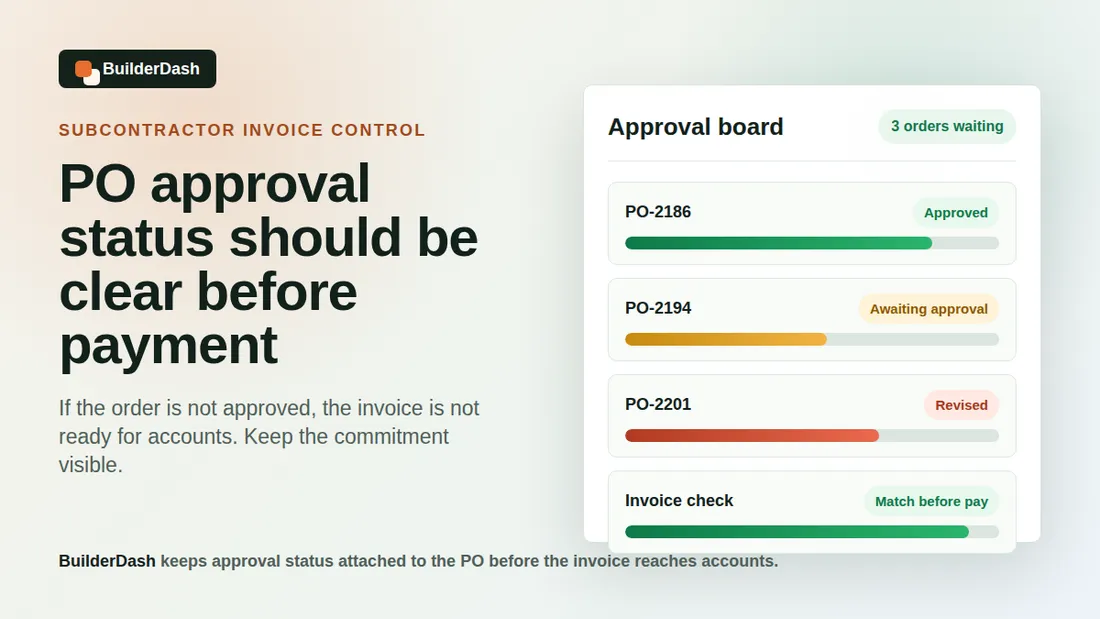
- Mark whether each one is approved, issued, revised or closed.
- Add any invoices or applications that are waiting to be checked.
- Flag anything missing a job reference, scope note or approval.
- Review the changes once a week with the site lead or project manager.
If a record cannot be explained in one sentence, it probably needs a better reference or a clearer approval trail.
Why It Helps Cash Flow as Well as Job Costing
Cash flow pressure usually starts before the invoice lands. A material order gets placed. A subcontract package is agreed. A variation is approved in principle but not written down. Then the invoice arrives and nobody is sure whether it matches the latest commitment.
A weekly snapshot helps you see that pressure early. You can spot what is about to turn into a payment, what still needs checking, and what should be disputed before it gets posted. That is better for the job and better for the month-end close.
Where BuilderDash Fits In
BuilderDash helps keep the commercial record in one place so the team is not chasing the same information through separate threads. If your approvals, purchase orders, invoice references and job records all live together, the weekly snapshot becomes much easier to maintain.
Common Mistakes to Avoid
- Mixing approved spend and open spend in the same line
- Letting site names and office references drift apart
- Updating the snapshot after the invoice is already being chased
- Hiding exceptions inside email replies instead of logging them clearly
- Treating the weekly review as optional when the job is busy
A good snapshot is boring in the best way. It shows the same structure every week, so the team can spot change immediately.
Final Thought
If you want tighter control on live jobs, start with a weekly commercial snapshot before you add more reporting. It is a small habit that makes a big difference to job costing, approvals and cash flow.
Suggested Internal Links
- How to Run a Weekly Committed Cost Review on Live Jobs
- Why Construction Accounts Need a Single Exception Register
- What Every Purchase Order Approval Should Contain Before It Becomes a Commitment
- The Construction Month-End Close Checklist for Small Contractors
- What Every Construction Invoice Pack Should Contain Before Accounts Touch It
Call to Action
If your team still pieces the commercial picture together from emails and spreadsheets, BuilderDash can keep PO approvals, invoice checks and job references in one place. Use it to make the weekly snapshot quicker to run and easier to trust.
Run your projects properly with BuilderDash.
One system for every enquiry, job, quote and invoice - built for project-based trades, not reactive call-outs.