BuilderDash and solidtakeoff.com Integration Is Coming Soon
 BuilderDash9 Jul 2026 5 min read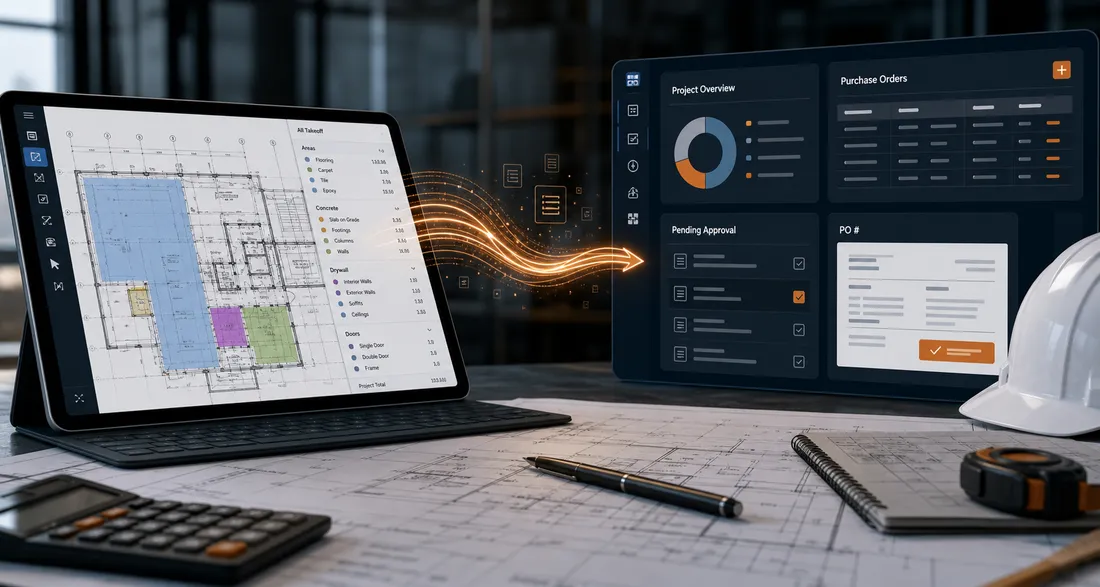
Takeoff software is good at one job: turning drawings into measurable quantities. That matters, because estimators and trades need a faster way to measure plans, mark up scope, and export quantities without spending half the day with a ruler and a spreadsheet.
But in a real construction business, the takeoff is not the end of the job. It is the start of a longer hand-off — from drawings to quantities, from quantities to pricing, from pricing to the job record, and then into purchase orders, approvals, and invoice checks.
That is why the BuilderDash and solidtakeoff.com integration matters. It is coming soon, and the goal is simple: make the move from estimating into job control less clunky, less manual, and less likely to lose important scope along the way.
What takeoff software is actually for
Takeoff software helps teams measure drawings and produce quantities from plans. solidtakeoff.com is built around that basic need: fast PDF measurement and quantity takeoff for builders, estimators and trades.
That kind of software is useful because it gives the estimating team a cleaner starting point. Instead of re-measuring the same drawing twice, they can work from a shared set of quantities, mark up changes on the plan, and export the figures they need for pricing.
If you want the exact product site, it is solidtakeoff.com.
In practical terms, that means:
- Less time spent on repetitive measuring.
- Fewer missed quantities when the job is busy.
- A clearer record of what was counted and why.
- Easier collaboration when more than one person is working on the same set of drawings.
That is valuable on its own. But it becomes much more valuable when the output does not have to be typed in again somewhere else.
Where the hand-off usually breaks
Most estimating problems are not really estimating problems. They are hand-off problems.
The estimator measures the drawings. The takeoff gets exported. Someone pastes the figures into a quote. The job wins. Then the site team, commercial team, or accounts team has to rebuild the same information in another system.
That is where things start to drift:
- A scope item gets renamed three different ways.
- A quantity is copied into the wrong job.
- A variation lives in a spreadsheet nobody opens.
- A PO gets raised from an older version of the estimate.
- An invoice arrives later and no one can see which takeoff it belongs to.
The more times a number gets retyped, the more chances there are for an error.
Why the BuilderDash and solidtakeoff.com link matters
The point of connecting takeoff software to BuilderDash is not to make estimating look impressive. It is to reduce the gap between what was measured and what the business actually controls once the job starts.
When the hand-off works properly, the team should be able to carry the useful parts of the takeoff forward:
- the job or project reference,
- the scope description,
- the measured quantity,
- the supporting drawing or note,
- and the commercial context around it.
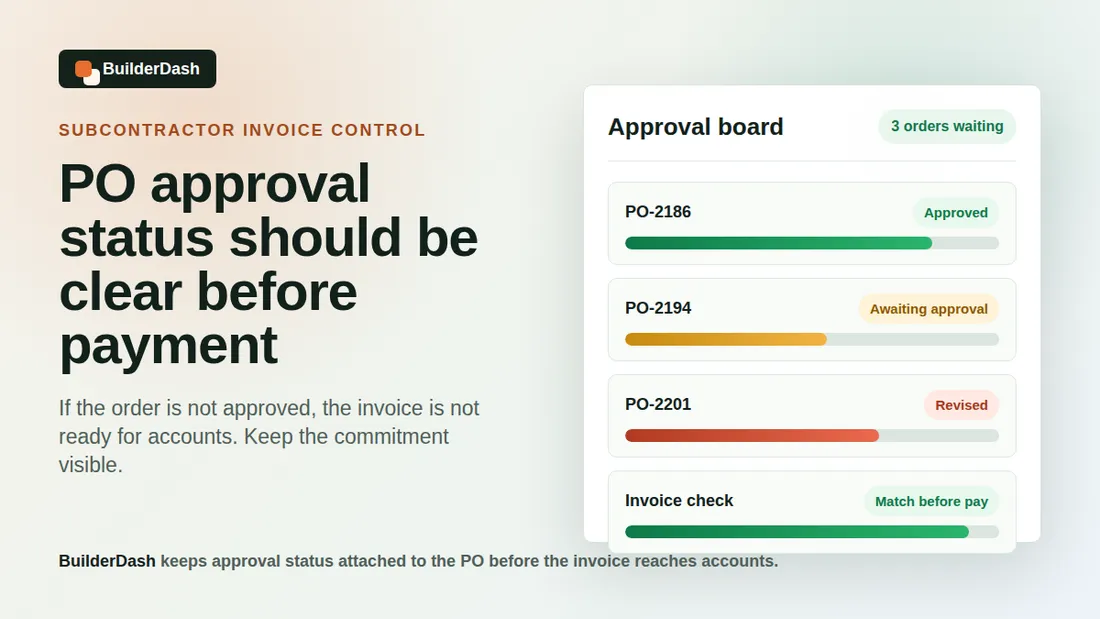
That gives BuilderDash a better starting point for the next steps — purchase orders, approval status, job references, and invoice checks. It also helps keep the commercial record closer to the original scope instead of turning into a mess of forwarded emails and copied cells.
What contractors should standardise now
Even before the integration lands, contractors can make the workflow easier by standardising a few basics.
Start with the identifiers:
- Use one clear job code.
- Keep project and site references consistent.
- Agree how variations will be named.
- Avoid changing the same scope item between estimating, ordering, and invoicing.
Then standardise the commercial route:
- Decide who can approve the PO.
- Keep the approved value visible.
- Record whether an item is a base scope or a variation.
- Make sure the invoice check can be traced back to the original job.
If those rules are already clear, an integration becomes genuinely useful. If they are not clear, software just moves confusion faster.
What better integration should save
The real value of a solidtakeoff.com-to-BuilderDash workflow is not just speed. It is control.
A good hand-off should save time on:
- retyping quantities into job records,
- checking whether the estimate and the PO still match,
- hunting through email threads for the latest version,
- and trying to work out why an invoice does not line up with what was originally measured.
It should also reduce avoidable commercial mistakes. When the estimate, the job, and the invoice all speak the same language, it is much easier to spot over-ordering, missing scope, or a claim that has drifted away from the original plan.
BuilderDash and solidtakeoff.com coming soon
This is why we are excited about the BuilderDash and solidtakeoff.com integration coming soon.
Takeoff software is strongest when it does not sit in isolation. It should feed the rest of the commercial workflow — the PO, the approval, the job cost, and the invoice check. That is where the numbers become useful in day-to-day construction operations.
If your team already uses takeoff software, now is a good time to tidy up the basics: job codes, naming conventions, variation labels, and approval rules. When the integration arrives, you will get more value from it if the process behind it is already clean.
Related reading
Next step
If you want takeoff quantities to flow cleanly into the rest of the job, keep an eye on the BuilderDash and solidtakeoff.com integration coming soon. In the meantime, make sure your job codes, approvals, and invoice checks are ready for it so the hand-off is clean when the link goes live.
Run your projects properly with BuilderDash.
One system for every enquiry, job, quote and invoice - built for project-based trades, not reactive call-outs.