
An invoice without a PO number is rarely just a missing reference.
It usually means one of three things: the order was never raised properly, the wrong person approved the spend informally, or the supplier is billing against a job record that the office cannot easily trace. In a busy construction business, any of those can lead to a cost being posted to the wrong job, paid before it has been checked, or left sitting in accounts until someone chases the story by memory.
The fix is not to let accounts guess. The fix is to have a simple triage step that tells the team what to do next.
Why the missing PO number matters
A PO number is more than an admin label.
It links the invoice to a commercial decision. When that reference is missing, the business loses some of the context it needs to answer basic questions:
- Was this spend approved?
- Which job should it hit?
- Does the amount match the agreed scope?
- Is this a partial invoice, a repeat invoice, or a new cost?
- Who should answer the query if something is wrong?
If those questions are not answered before posting, the invoice can still be paid, but the job cost record becomes less reliable.
Start with the job, not the invoice
When an invoice lands without a PO number, the first job is to identify what it belongs to.
Look for:
- the site or project reference on the invoice
- the supplier name
- the date of the work or delivery
- the description of the goods or labour
- any supporting paperwork such as a delivery note, timesheet, quote or site instruction
If the job cannot be identified quickly, the invoice should be queried straight away rather than forced into the system on a guess. Guessing saves a few minutes now and can create a much bigger correction later.
Check whether the spend was ever approved
Not every missing PO is the same problem.
Sometimes the spend was approved verbally on site and the paperwork simply never followed. Sometimes the supplier sent work or materials before the PO was raised. Sometimes the invoice is legitimate but the person who authorised the work never passed the details to accounts.
Before posting the cost, ask:
- was a PO raised after the work started?
- did anyone approve the spend in email, WhatsApp, or a call?
- is there a quote or work order that supports the amount?
- has the job manager confirmed the cost belongs on this project?
If the answer is still unclear, the invoice needs a query owner, not a silent posting.
Decide whether to hold, query, or match manually
The business usually has three sensible options.
Hold it
Hold the invoice when there is no reliable job reference, no approval trail, or no evidence that the cost should be paid yet. This is the safest choice when the invoice could belong to the wrong job or the value is not agreed.
Query it
Query the invoice when the job is known but something is missing:
- no PO number
- no site reference
- no delivery note
- no approved variation
- no signature or timesheet
The query should say exactly what is missing and who is expected to respond.
Match it manually
Only match it manually when the commercial record is still clear enough to do so with confidence. That might be acceptable if the PO exists under a slightly different reference, or if the supplier has invoiced a genuine follow-on item that was already approved.
The key point is that manual matching should be deliberate, not a workaround for messy records.
Ask for the right missing evidence
If the invoice cannot be posted as received, ask for the evidence that will actually solve the problem.
That usually means one or more of the following:
- the PO number
- the correct job or site reference
- the approved quote
- a delivery note
- a timesheet or daywork sheet
- a signed instruction or variation
- confirmation of the person who authorised the work
If the supplier cannot provide any of that, the team should treat the invoice as an unresolved commercial issue rather than a routine posting task.
Stop the same issue happening again
The easiest way to reduce missing PO numbers is to make the PO part of the normal buying habit.
That means:
- raising the PO before the order goes out where possible
- making the job reference mandatory
- confirming who can approve spend
- keeping the approval and the order in the same record
- training site teams not to assume a message in chat counts as a PO
It also helps to make exceptions visible. If one supplier, one site lead, or one type of job is repeatedly sending invoices without a PO, that pattern should be reviewed rather than ignored.
What accounts needs from site and project managers
Accounts should not be left to reconstruct the commercial story alone.
The people closest to the work need to supply the missing context:
- what was ordered
- who asked for it
- what job it belongs to
- whether the amount is correct
- whether anything was changed on site
That short handover saves the accounts team from having to chase three different people before they can even decide whether the invoice is ready to post.
How BuilderDash helps
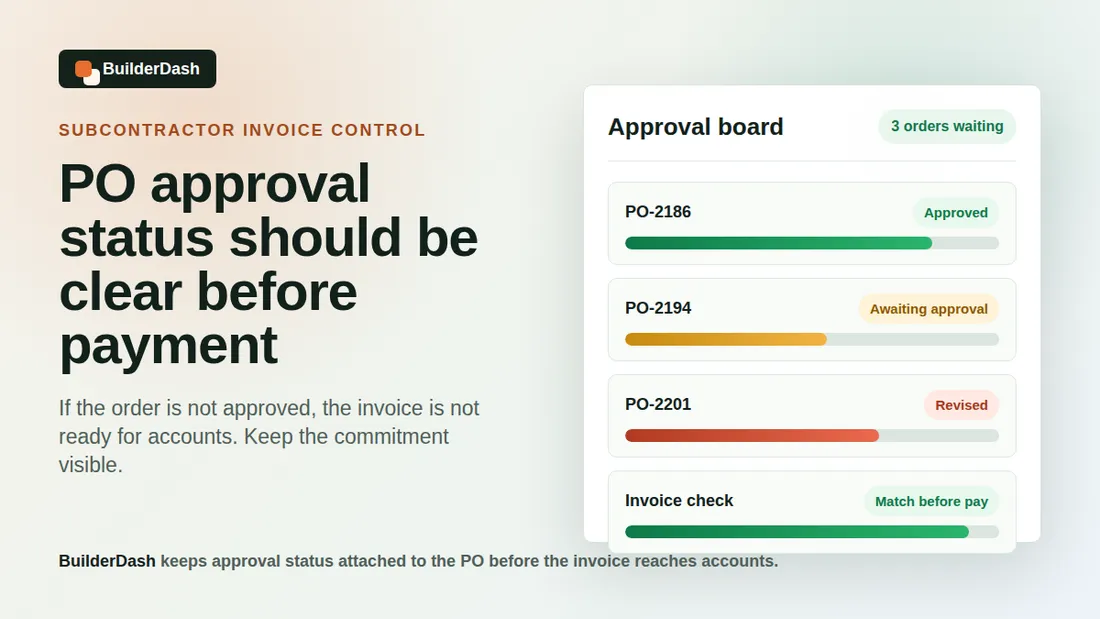
BuilderDash helps keep the PO, approval, job reference, and invoice trail in one workflow so the invoice does not arrive as a loose fragment.
That makes it easier to spot when something is missing, route the query to the right owner, and stop the same cost from being handled differently by site and accounts. For UK contractors, that means less back-and-forth, cleaner job costing, and fewer invoices being parked simply because nobody can find the original order.
Suggested internal links
- Why Construction Invoice Backups Should Travel With the Invoice
- How to Stop Invoice Queries Going Missing Between Site and Accounts
- Why PO Approval Status Should Be Checked Before a Subcontractor Invoice Is Paid
- What a Clean Subcontractor Invoice Workflow Looks Like
Call to action
If your team is still receiving invoices without PO numbers, tighten the rule at the point of order, not after the invoice arrives. BuilderDash is designed to keep the approval, job reference, and invoice check together so accounts can post with confidence instead of chasing missing context.
Run your projects properly with BuilderDash.
One system for every enquiry, job, quote and invoice - built for project-based trades, not reactive call-outs.