Why Fit-Out Jobs Need Room and Zone References on Every PO
 BuilderDash3 Jul 2026 4 min read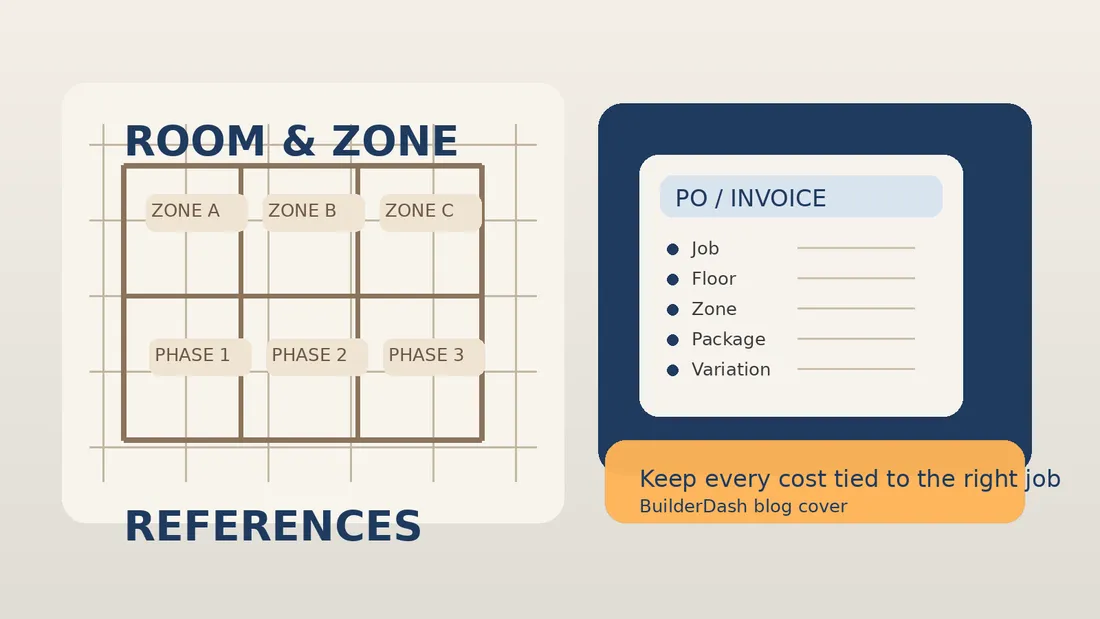
Why generic references fall apart on fit-out jobs
Fit-out and refurbishment work is rarely tidy from a paperwork point of view.
One job can contain several floors, rooms, phases, trades, and change orders at the same time. If every PO just says the main site name, accounts and project teams still have to work out which part of the job the cost belongs to.
That is fine when there is only one small order. It becomes messy as soon as the same supplier is working across multiple areas, or when different trades are active in parallel.
The result is predictable:
- invoices need chasing for clarification
- the wrong cost lands on the wrong package
- variations are harder to prove
- stage payments become harder to reconcile
- job costing loses detail exactly when the job needs it most
Room and zone references solve that by making the commercial record match the way fit-out teams already talk about the work on site.
What a useful reference should contain
A good fit-out reference should make it obvious where the cost belongs without needing a long explanation.
In practice, that usually means capturing:
- project or job number
- building name or client site
- floor
- zone, wing, or area
- room number or room name
- trade or package
- variation number, if the scope has changed
The point is not to make the PO look complicated. The point is to make it usable later.
If the invoice arrives three weeks after the work started, the office should still be able to tell exactly which area of the project it relates to.
Why room and zone references matter more on refurbishment work
Refurbishment projects create a lot of overlap.
One team may be stripping out old finishes in one room while another is installing new services in the next. Materials can be delivered in batches. Subcontractors may price by area. Temporary access can change the sequence of work. None of that is unusual, but it makes vague references a real problem.
When the reference is too broad, the business loses three things at once:
- cost allocation
- approval clarity
- dispute evidence
If a supplier has worked across several areas, the invoice should not force the accounts team to guess which part is chargeable. The commercial record should already say that.
Keep the PO aligned to how the job is actually run
The best references usually follow the site breakdown rather than the office filing structure.
That means using the labels the project team already understands:
- Ground floor reception
- Level 2 office core
- East wing corridor
- Meeting room package
- Reception joinery variation
If the team uses those terms on site, use them on the PO and in the invoice note too. That makes the paperwork easier to review and makes the conversation between site and accounts much shorter.
It also helps when more than one package is live at the same time. A ceiling contractor, joinery supplier, and electrician can all work on the same floor without their costs blurring together.
Variations need the same reference discipline
Fit-out jobs change constantly.
A room may be altered after strip-out. A client may add a small scope change. A detail may be value-engineered and then reversed. If those changes are not tied back to the original PO and location reference, the extra cost becomes hard to track.
Every variation should keep the original reference visible and add:
- what changed
- where it changed
- who approved it
- when the approval happened
- whether the value is revised or still provisional
That way the invoice can be compared against the approved scope instead of being treated as a fresh conversation every time.
How BuilderDash helps keep the reference intact
BuilderDash is useful when the business wants one place to keep the job reference, PO, approval, and invoice check together.
That matters on fit-out and refurbishment work because the team often needs to move quickly between the site, the office, and the supplier without losing the thread. If the reference lives in a spreadsheet, a WhatsApp message, or someone’s inbox, it is easy for the detail to get lost.
A clearer workflow keeps the commercial record together:
- the right room or zone is captured before the order goes out
- the approval is tied to the right package or variation
- the invoice can be checked against the approved scope
- accounts can see what belongs where before payment is released
That is simpler for the office and fairer for the job.
Suggested internal links
- Why Project Codes and Site References Matter on Materials Invoices
- How to Control Purchase Order Overspend and Variations in Construction
- How to Run a Weekly Committed Cost Review on Live Jobs
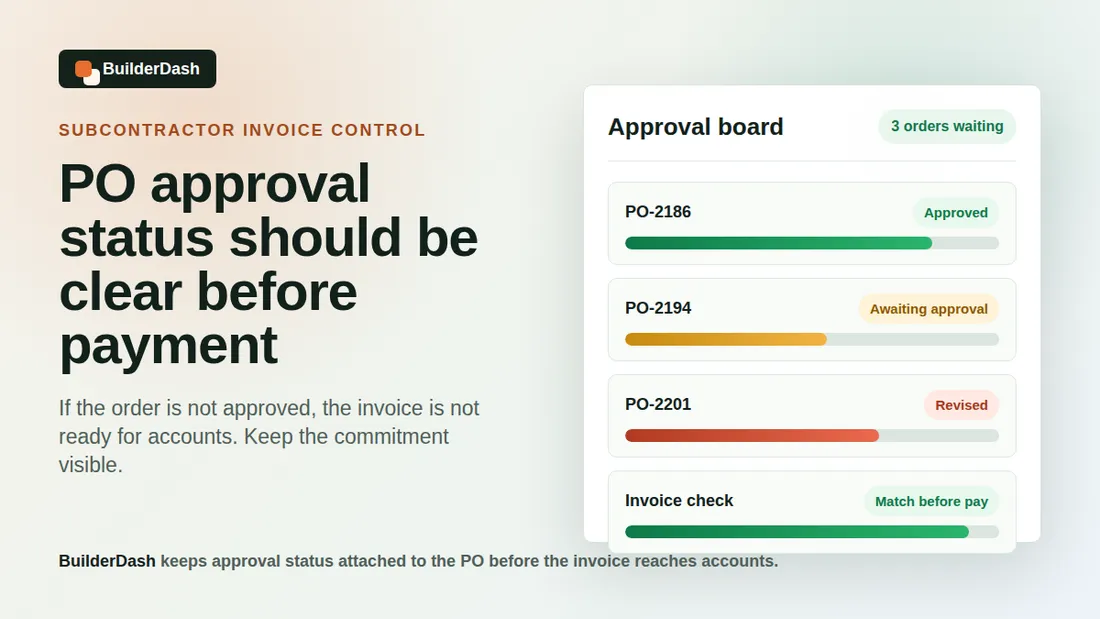
- Why PO Approval Status Should Be Checked Before a Subcontractor Invoice Is Paid
Suggested call to action
If your fit-out paperwork still relies on one generic site name, BuilderDash can help keep room, zone, floor, and package references attached to the PO and invoice so the cost lands in the right place first time.
Run your projects properly with BuilderDash.
One system for every enquiry, job, quote and invoice - built for project-based trades, not reactive call-outs.