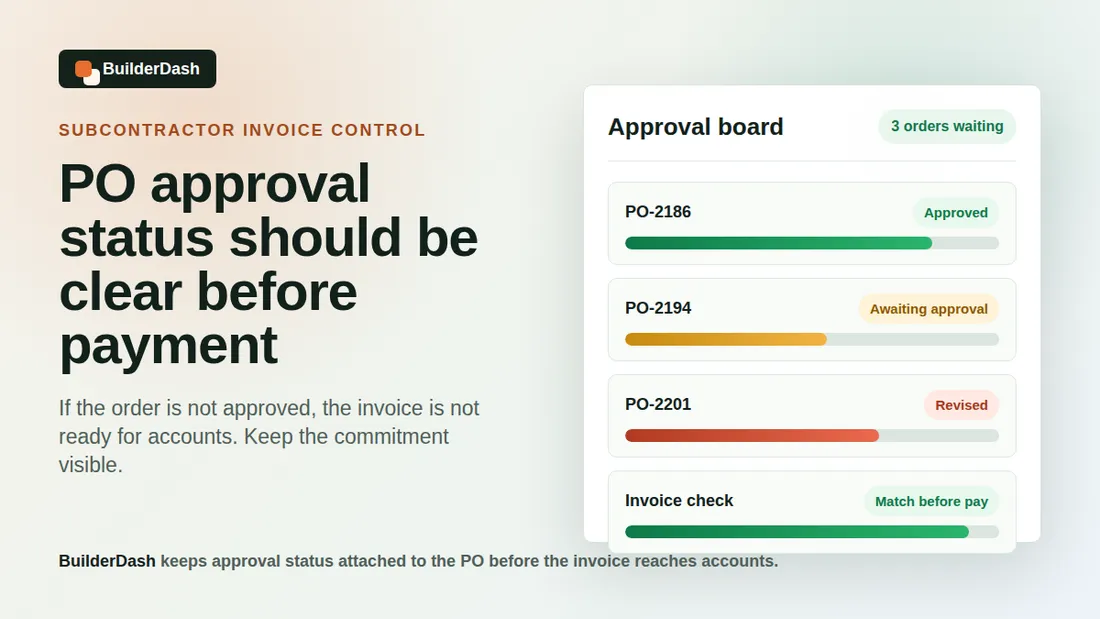
Why Plant Hire Costs Need a Live Record Before the Monthly Invoice Arrives
 BuilderDash2 Aug 2026 5 min read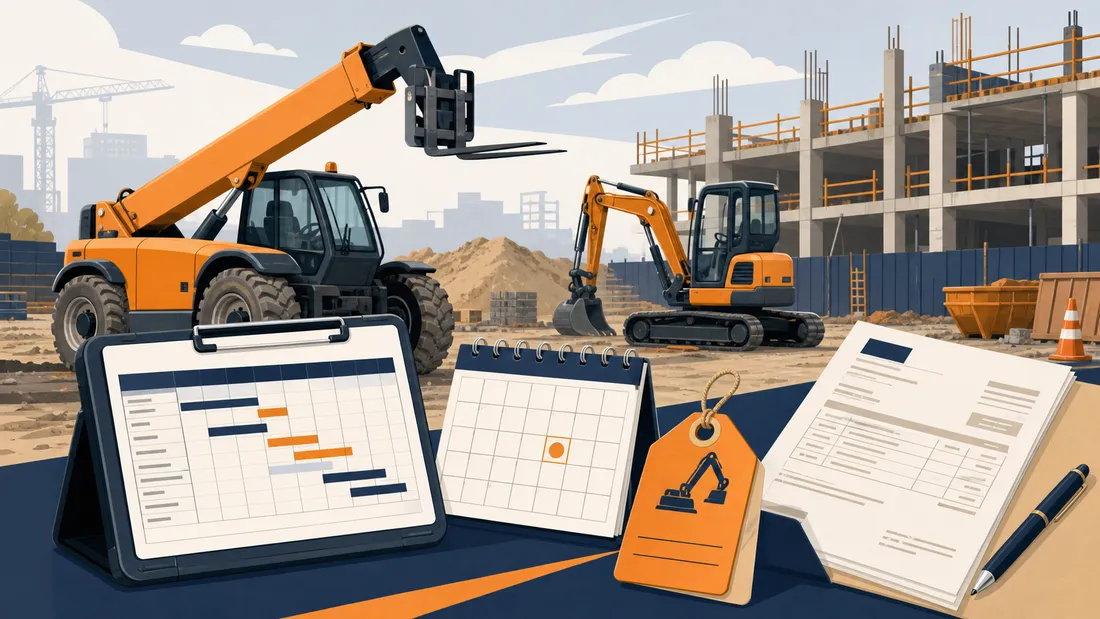
Plant hire is one of those costs that looks harmless until the monthly invoice lands.
By then, the machine may have been moved, the job may have changed shape, and the person who asked for the hire may have forgotten exactly when it started or when it should have come off site. If the office only sees the bill at month end, it has to reconstruct the whole story after the fact.
That is how hire days get missed, off-hire dates drift, and costs end up on the wrong job.
Why plant hire is easy to lose track of
Plant hire does not behave like a one-off materials invoice.
It usually runs over time, which means the risk is not just the headline price. The risk is the period it covers, the job it belongs to, and whether the hire should still be running at all.
On a live job, the same machine can:
- start on one package and finish on another
- move between nearby sites
- carry on after the work it was hired for has ended
- pick up extra charges for transport, fuel, damage, cleaning, or late collection
If nobody keeps a live record, the monthly invoice becomes the first proper check instead of the last one.
What the live record should capture
A plant hire record does not need to be complicated. It just needs to hold the details that prove what was agreed and what should be billed.
At minimum, record:
- supplier name and contact
- PO number or approval reference
- job number and site reference
- item hired, such as a telehandler, excavator, tower light, or generator
- hire start date and expected off-hire date
- agreed rate, minimum term, and any transport charge
- who requested it and who approved it
- whether the machine is shared across more than one job
If the hire is likely to run longer than planned, note the reason early. A weather delay, an access issue, or a late delivery can all extend the hire period, but only if the team can see that the period has changed.
The evidence that should travel with the hire
Plant hire is easier to challenge, and easier to approve, when the supporting evidence is attached to the record.
Useful evidence includes:
- the original hire order or PO
- delivery ticket or on-hire note
- off-hire confirmation
- photos or site notes if the machine was moved or swapped
- any email or message confirming an extension
- a note of who authorised the extra days
That evidence matters because the invoice is often only a summary. It may not tell you when the hire actually sat idle, who asked for the extension, or whether the machine should already have been collected.
What to check before the invoice is posted
When the monthly bill arrives, the first task is not to post it. It is to compare it with the live record.
Check these points in order:
- Does the invoice match the agreed hire item and rate?
- Does the billed period match the recorded hire dates?
- Are there days after the off-hire date?
- Has the machine been charged to the right job?
- Are transport, fuel, damage, or cleaning charges separately explained?
- If the hire was shared, has the cost been split correctly?
If any of those answers is unclear, the invoice is not ready just because it looks familiar.
What goes wrong when the off-hire date is missing
The off-hire date is the point where plant hire usually starts to leak money.
If the date is not logged promptly, site may assume the machine was collected, while the supplier keeps charging because nobody told them to stop. On a busy programme, a few extra days can slip through almost unnoticed.
That creates three separate problems:
- the job cost is overstated
- the supplier statement becomes harder to reconcile later
- the site team loses confidence in the commercial record
The fix is simple: log the off-hire request the same day it is made, not when the invoice exposes the gap.
How to handle plant that moves between jobs
Shared plant is common on smaller and mid-sized sites, especially when teams are working across a cluster of jobs.
The danger is that a single hire invoice gets treated as if it belongs to one job only, even though the machine served more than one package.
If plant is moved, record:
- the date it left the first job
- the date it arrived on the second
- which job paid for transport
- how the hire days should be split
- whether one job used the machine long enough to carry the fixed cost
That information is far easier to capture on the day than to reverse-engineer from a month-end bill.
Why this matters for cash flow
Plant hire affects cash flow in a quiet way.
The business may not feel the cost until the invoice lands, but the cash has effectively been committed from the moment the hire started. If the hire has drifted beyond the original plan, the job can look healthier than it really is right up until the invoice is posted.
That is why plant should sit in the same commercial record as purchase orders and invoices, not in a separate memory, spreadsheet, or WhatsApp thread.
When the hire is visible early, the commercial team can see:
- what has already been committed
- what still needs approval
- what should be queried before payment
- whether the job is still on budget after the extra days
How BuilderDash helps
BuilderDash is useful here because the hire, the approval, and the invoice check stay tied to the job record instead of being split across email, chat, and paper notes.
That makes it easier for the office to see:
- which job the plant belongs to
- whether the hire was approved
- whether the off-hire date was recorded
- whether the invoice needs a query before posting
For construction teams, that is the difference between reacting to a month-end surprise and controlling the cost while the job is still live.
Suggested internal links
- What to Do When an Invoice Arrives Without a PO Number
- Why Construction Invoice Backups Should Travel With the Invoice
- How to Stop Invoice Queries Going Missing Between Site and Accounts
- How to Reduce End-of-Month Invoice Chasing in Construction
Call to action
If plant hire is still being tracked only when the monthly invoice arrives, move the record forward to the day the hire starts. BuilderDash can keep the PO, approval, and off-hire note together so accounts is not left rebuilding the timeline from scratch.
Run your projects properly with BuilderDash.
One system for every enquiry, job, quote and invoice - built for project-based trades, not reactive call-outs.