
Practical guides for running project-based trades.
No fluff - just straight guidance on quoting, job costing, purchase orders, invoicing, CIS, VAT and keeping multi-week projects under control.
How to Build a Month-End Accrual List for Construction Jobs
A clean accrual list shows what has been committed but not yet invoiced, so month-end job costing reflects the real position instead of the inbox.
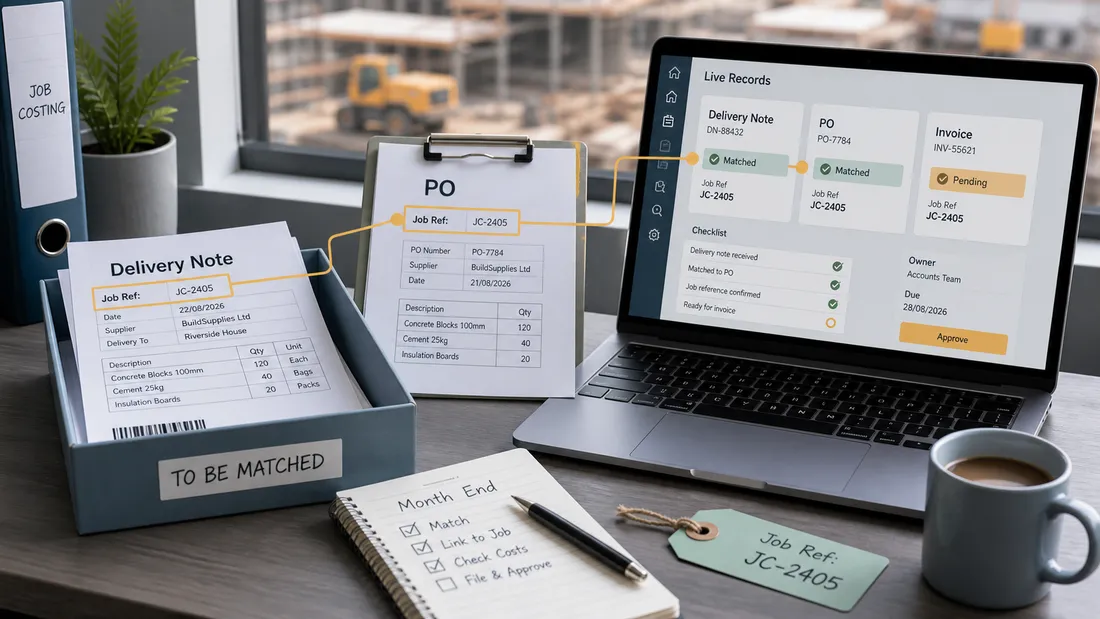
How to Keep Delivery Notes Linked to the Right Job Before Month End
Delivery notes only help if they stay linked to the right job. A simple matching routine keeps site and office aligned before invoices reach accounts.

How to Stop Spend Slipping Through Email Approval Chains on Construction Jobs
Email approvals are easy to lose and hard to audit. A clear workflow gives site teams, managers and accounts the same view before money leaves the job.

How to Stop Spend Slipping Through Email Approval Chains on Construction Jobs
Email approvals are easy to lose and hard to audit. A clear workflow gives site teams, managers and accounts the same view before money leaves the job.

How to Build a Weekly Job Commercial Snapshot for Small Construction Firms
A weekly commercial snapshot gives you one clear view of approved spend, open purchase orders, waiting invoices and overdue approvals before the numbers drift.

How to Build a Weekly Job Commercial Snapshot for Small Construction Firms
A weekly commercial snapshot gives you one clear view of approved spend, open purchase orders, waiting invoices and overdue approvals before the numbers drift.
How to Build a Weekly Job Commercial Snapshot for Small Construction Firms
A weekly commercial snapshot keeps small construction firms on top of open POs, approved spend, invoices waiting, overdue approvals, and cash flow before month end turns into guesswork.

How to Check Supplier Order Confirmations Against the Original PO
A supplier confirmation should not quietly become the new commercial record. Checking it against the original PO catches scope drift, price changes, and delivery assumptions before work starts.
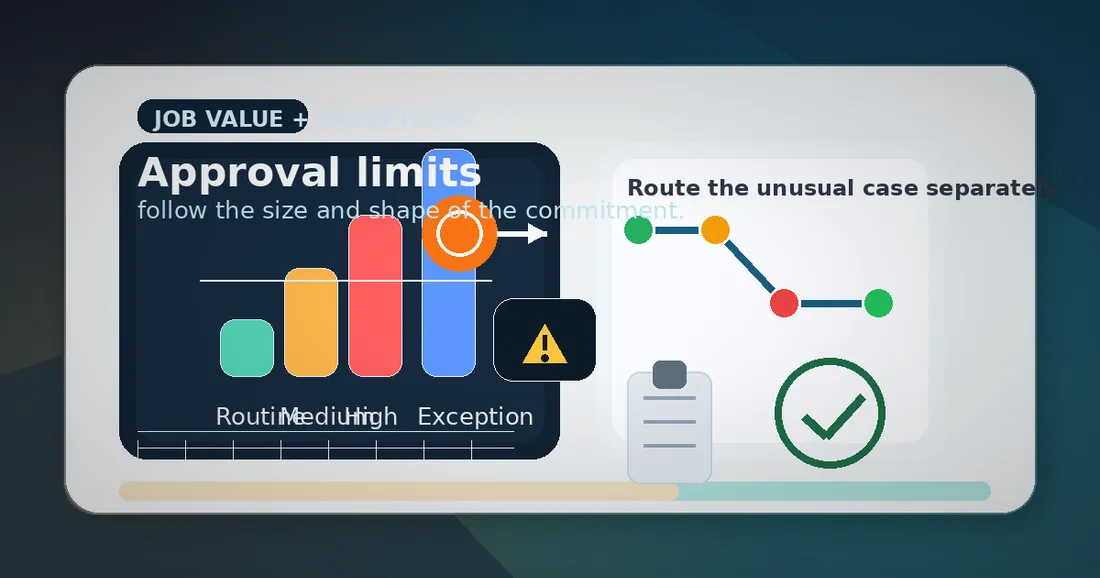
Why Approval Limits Should Follow Job Value, Not User Role
Role-based approvals sound tidy, but job value and exception routing are what keep construction spend moving without losing control of the commitment.
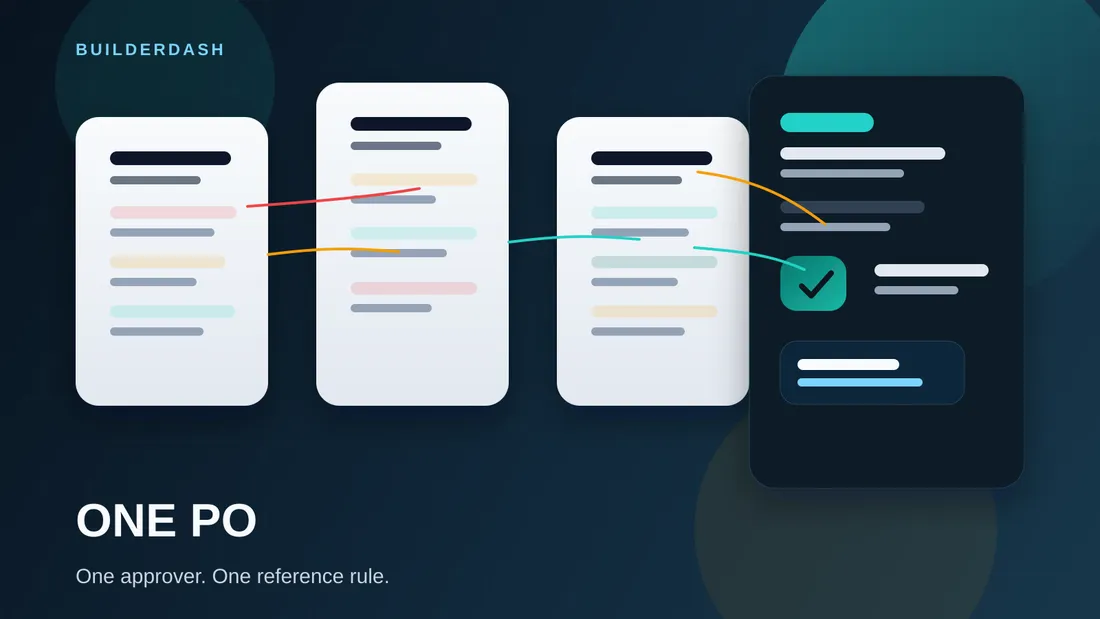
How to Stop Duplicate Purchase Orders on Live Construction Jobs
Duplicate POs usually appear when site, office, and suppliers are working from different confirmations. One live record, one approver, and one reference rule keeps the job clean.

How to Stop Duplicate Purchase Orders on Live Construction Jobs
Duplicate purchase orders usually appear when site, office, and supplier confirmations drift apart. One live record, one approver, and one reference rule keep the commitment clean.
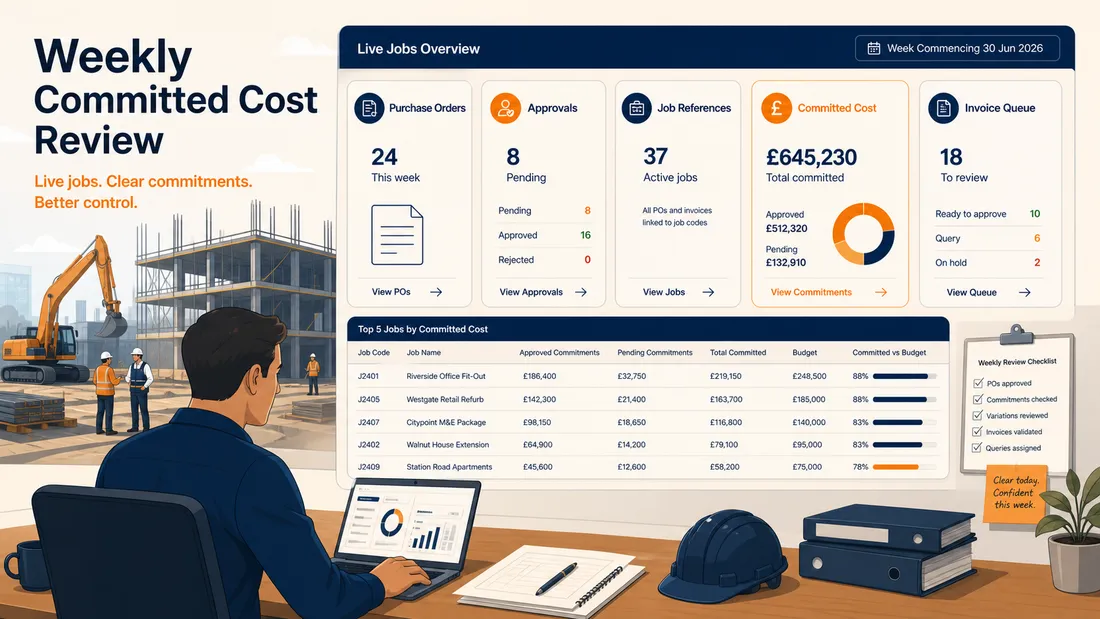
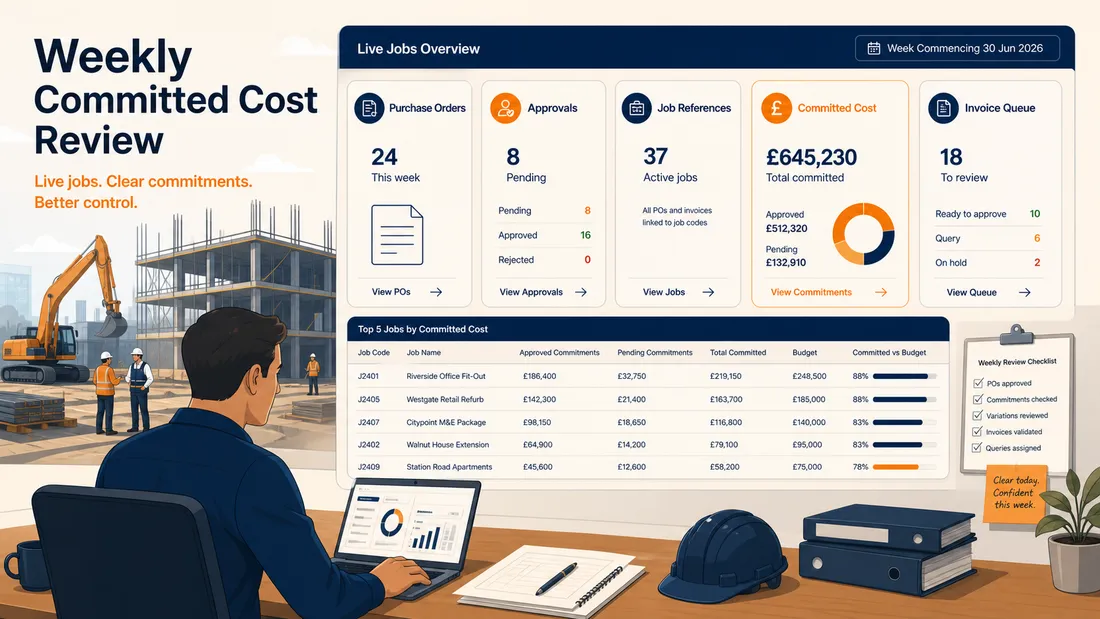
How to Run a Weekly Committed Cost Review on Live Jobs
A weekly committed cost review gives contractors a clearer view of what has been approved, what is still open, and what will hit the job next.

What Every Purchase Order Approval Should Contain Before It Becomes a Commitment
A PO should not be approved on instinct alone. The approver needs a clear scope, job reference, value, and exception trail before the order becomes a live commitment.

Why Plant Hire Costs Need a Live Record Before the Monthly Invoice Arrives
Plant hire bills often arrive after the job has already moved on. A simple live record for the hire start, off-hire date, site, and approval keeps the cost visible before month-end surprises.

What to Do When an Approved Purchase Order Never Reaches the Supplier
An approved PO is only useful if the supplier actually receives it. Missing the send step can create delays, duplicate follow-up, and invoices that arrive before the commercial record is complete.

How to Build a Purchase Order Approval Chain That Keeps Jobs Moving During Holiday Cover
One absent approver can stall materials, labour and subcontract packages. A simple approval chain keeps decisions moving and shows who can sign what when the usual reviewer is away.

How to Build a Commercial Handover Sheet That Keeps Site and Accounts Aligned
A commercial handover sheet keeps job references, approvals, and invoice status together so site and accounts are not working from different versions of the truth.

How to Capture Site Receipts Before Small Purchases Go Missing
Small site spends still need a proper job reference. Capture receipts while they are fresh, keep them on the right job, and stop small costs drifting.

What to Do When a Purchase Order Needs Revising Mid-Job
PO revisions are normal on live jobs. The risk is not the change itself — it is losing the original value, the reason for the update, and the approval trail before accounts sees the invoice.

What to Do When a Variation Instruction Is Not Logged Properly
Variation instructions often start in WhatsApp, email, or a site conversation. A single log gives the business one trusted record before the cost reaches accounts.
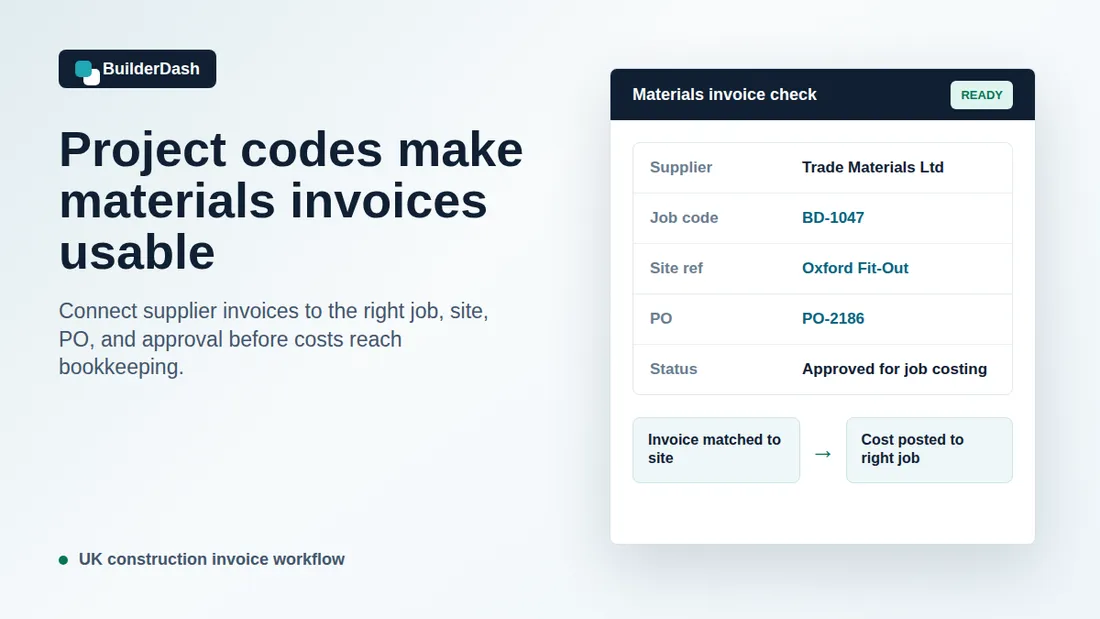
How to Use Project Codes and Site References to Keep Invoices in the Right Job
If invoices, delivery notes, and small purchases arrive with different references, job costing breaks fast. One project-code rule keeps the paperwork attached to the right job.
Why Consistent Project References Stop Construction Admin from Falling Apart
One job can pick up several names across site, office, and supplier paperwork. A simple reference rule keeps the right cost on the right job.

Why Consistent Project References Stop Construction Admin from Falling Apart
One job can pick up several names across site, office, and supplier paperwork. A simple reference rule keeps the right cost on the right job.

Why Consistent Project References Stop Construction Admin from Falling Apart
One job can pick up several names across site, office, and supplier paperwork. A simple reference rule keeps the right cost on the right job.

Software to Manage Purchase Orders for Construction Projects: What It Should Do After the PO Is Raised

Why Unapproved Variations Can Drain Cash Flow Before the Final Account
Unapproved variations create a quiet cash flow problem: the work gets done, the cost lands, and the money is still stuck in approval limbo. Here’s how to tighten the process.

Construction Industry Purchase Order Software: The Fields Every PO Should Capture
If a PO system only issues numbers, it is not doing enough for construction. The useful part is the data it captures and keeps visible.
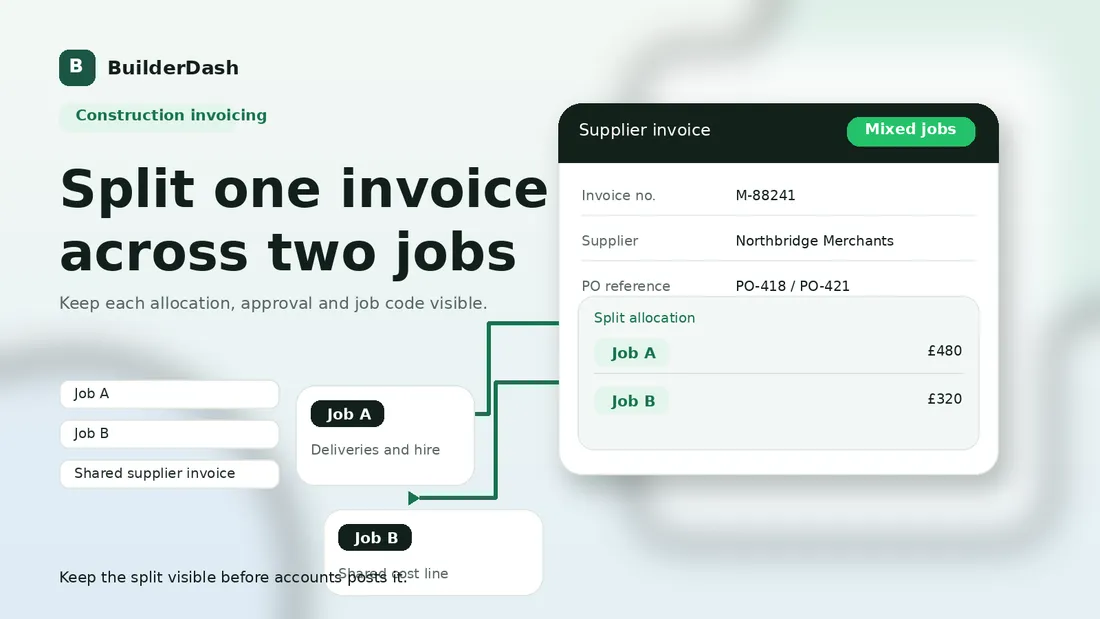
How to Split a Supplier Invoice Across Multiple Jobs Without Losing Job Costing
One supplier invoice can belong to more than one job. The fix is a clear split allocation, not a guess in accounts after the cost has already landed.
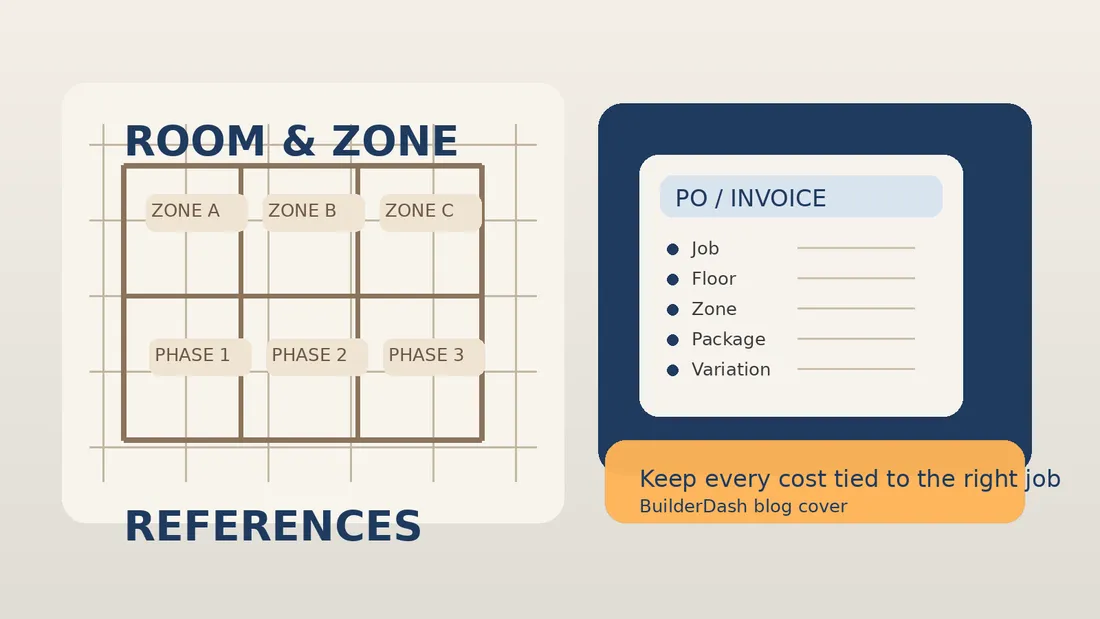
Why Fit-Out Jobs Need Room and Zone References on Every PO
On fit-out jobs, a generic site name is not enough. Room and zone references make it easier to match POs, variations, and invoices to the right part of the job.

How to Use Project Codes and Site References to Keep Invoices in the Right Job
If invoices, delivery notes, and small purchases arrive with different references, job costing breaks fast. One project-code rule keeps the paperwork attached to the right job.
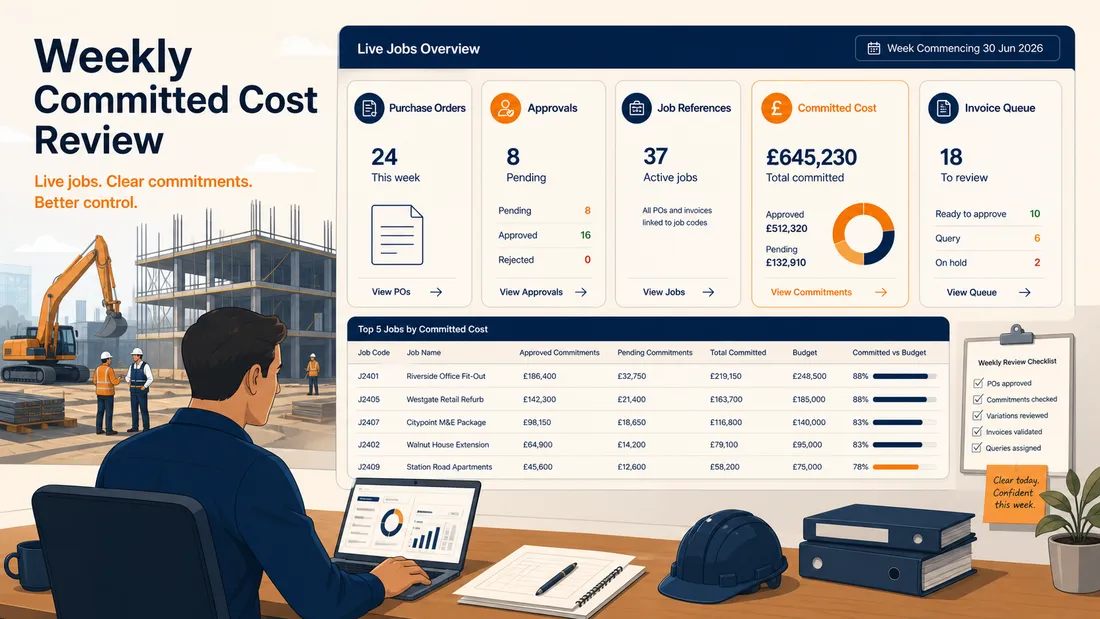
How to Run a Weekly Committed Cost Review on Live Jobs
A weekly committed cost review gives contractors a clearer view of what has been approved, what is still open, and what will hit the job next.
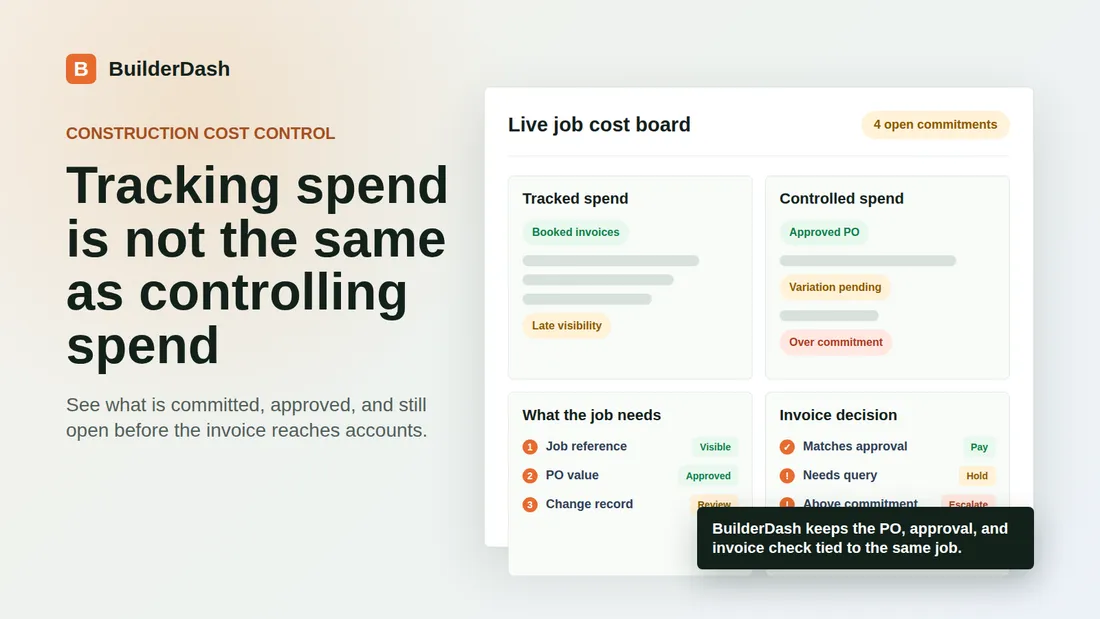
Tracking Spend Is Not the Same as Controlling Spend
A spend report can show what has already happened. Control means knowing what is committed, approved, and still open before the invoice lands.
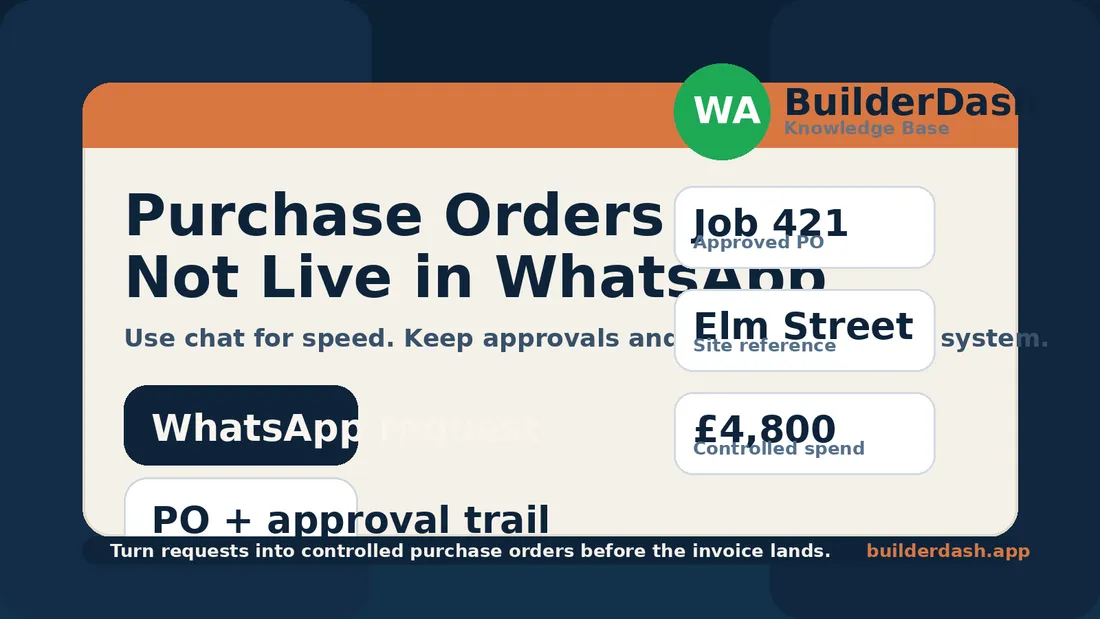
How to Stop Purchase Orders Getting Lost in WhatsApp
WhatsApp is quick for site communication, but it is a poor place to store commercial approvals. Contractors need a simple rule for turning chat requests into proper purchase orders before spend starts drifting.

How to Control Purchase Order Overspend and Variations in Construction
A purchase order only controls spend if changes are recorded before the invoice arrives. Here is a practical workflow for handling overspend, revised orders, and construction variations without losing sight of the committed job cost.
Reading is good. Running the job properly is better.
Put it into practice with BuilderDash - one system for every enquiry, job, quote and invoice.