
Practical guides for running project-based trades.
No fluff - just straight guidance on quoting, job costing, purchase orders, invoicing, CIS, VAT and keeping multi-week projects under control.

How to Build a Simple Invoice Escalation Ladder for Construction Teams
Invoice queries stall when nobody knows who should act next. A simple escalation ladder keeps construction invoices moving without sending every problem to the director.

Why Fit-Out Teams Need Tight PO Discipline Before Approving Subcontractor Invoices
Fit-out invoices move quickly, but approval should still follow the purchase order, scope, and variation trail. Tight PO discipline keeps accounts from approving guesswork.
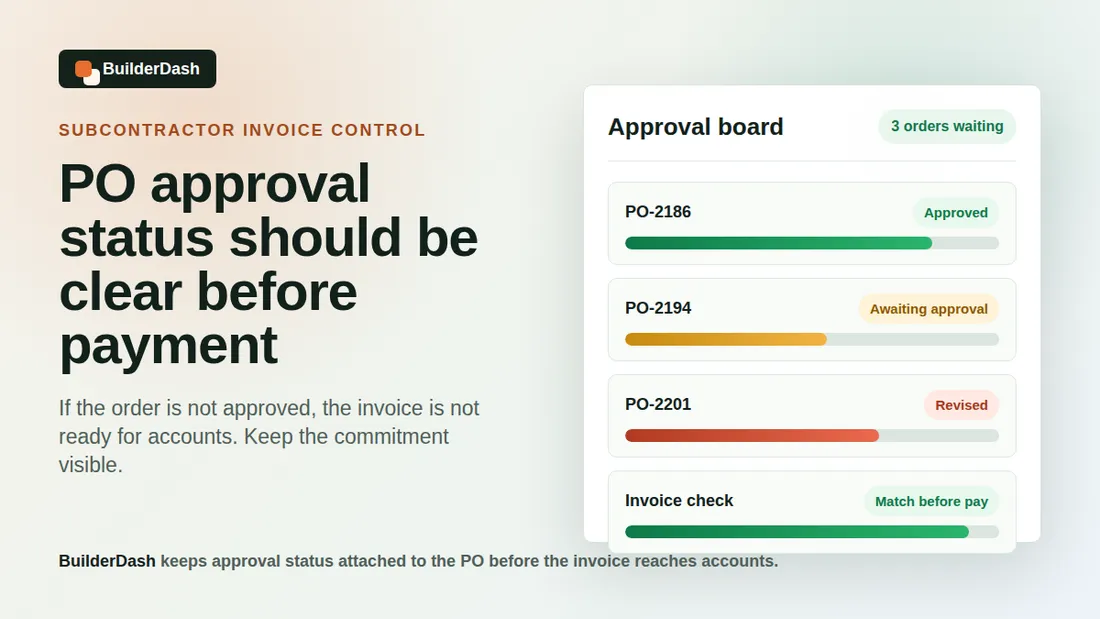
Why Fit-Out Teams Need Tight PO Discipline Before Approving Subcontractor Invoices
Fit-out invoices move quickly, but approval should still follow the purchase order, scope, and variation trail. Tight PO discipline keeps accounts from approving guesswork.
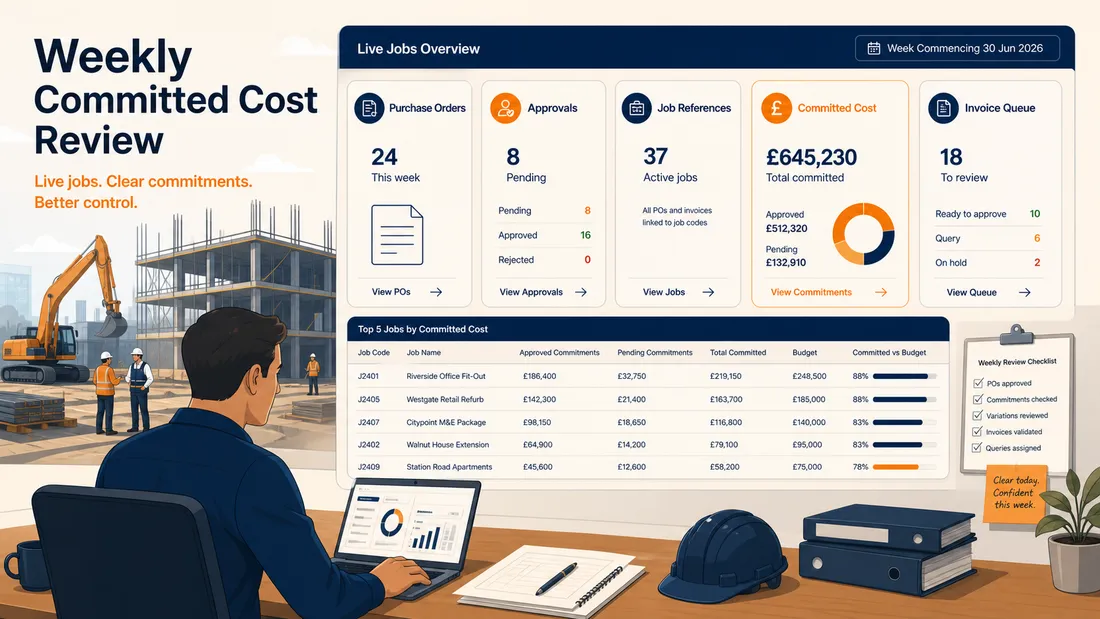
How to Build a Month-End Accrual List for Construction Jobs
A clean accrual list shows what has been committed but not yet invoiced, so month-end job costing reflects the real position instead of the inbox.
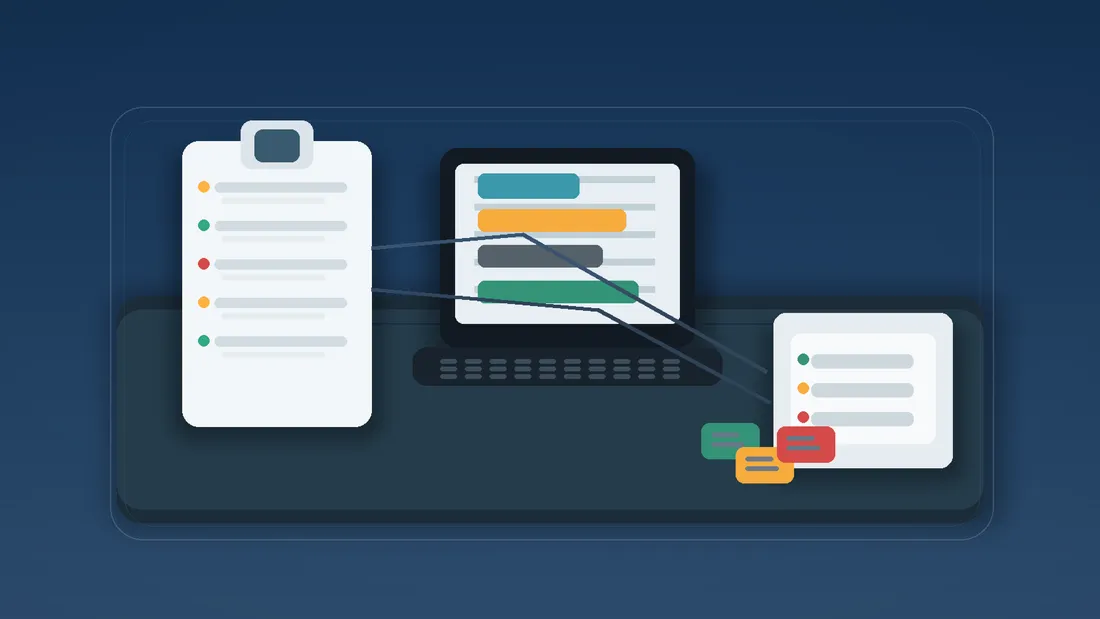
Why Construction Invoice Status Needs a Pending Evidence Step
Invoice statuses often jump straight from received to queried or approved. A pending evidence step keeps missing delivery notes, timesheets, and sign-offs visible instead of buried in email.
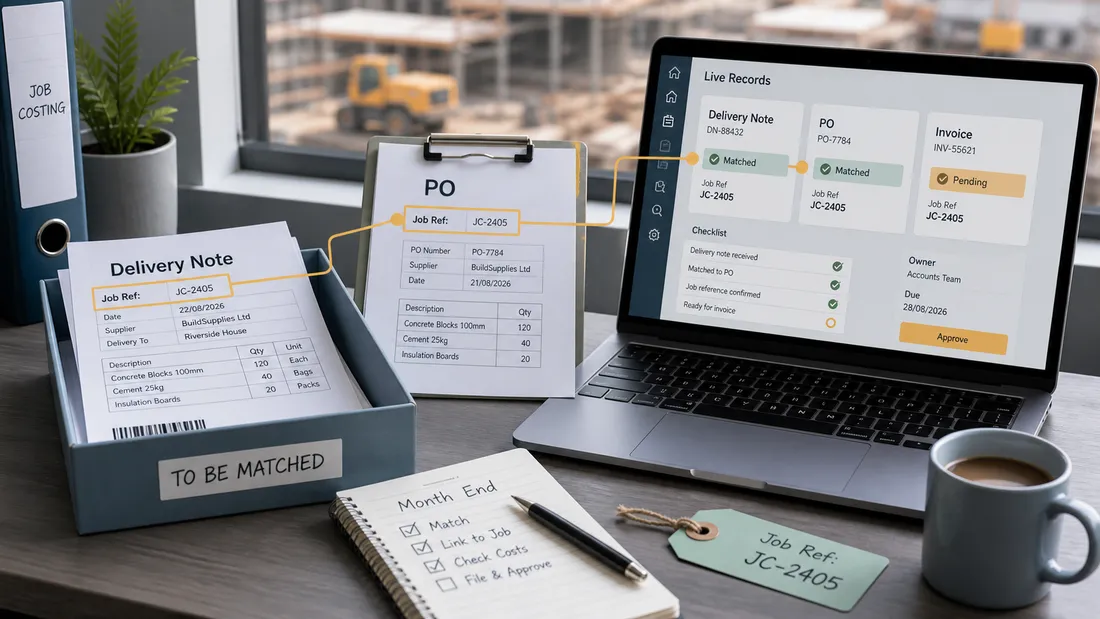
How to Keep Delivery Notes Linked to the Right Job Before Month End
Delivery notes only help if they stay linked to the right job. A simple matching routine keeps site and office aligned before invoices reach accounts.
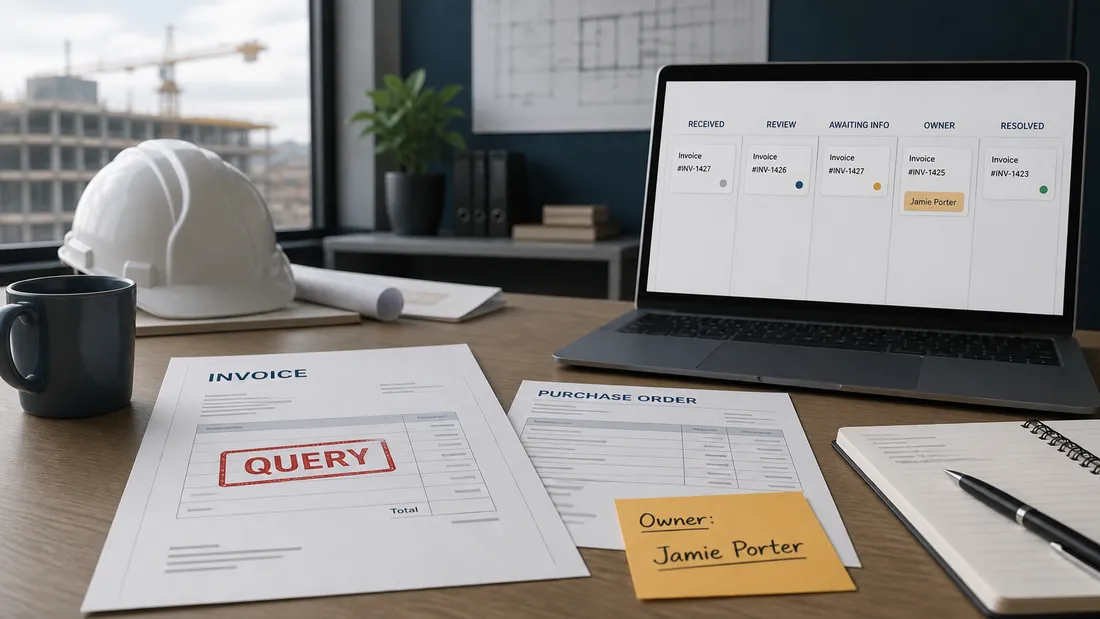
Why Every Construction Invoice Query Needs a Named Owner
Invoice queries often stall because nobody owns the next step. A named owner keeps the issue, the reply, and the deadline in one visible record.

How to Stop Spend Slipping Through Email Approval Chains on Construction Jobs
Email approvals are easy to lose and hard to audit. A clear workflow gives site teams, managers and accounts the same view before money leaves the job.

How to Stop Spend Slipping Through Email Approval Chains on Construction Jobs
Email approvals are easy to lose and hard to audit. A clear workflow gives site teams, managers and accounts the same view before money leaves the job.
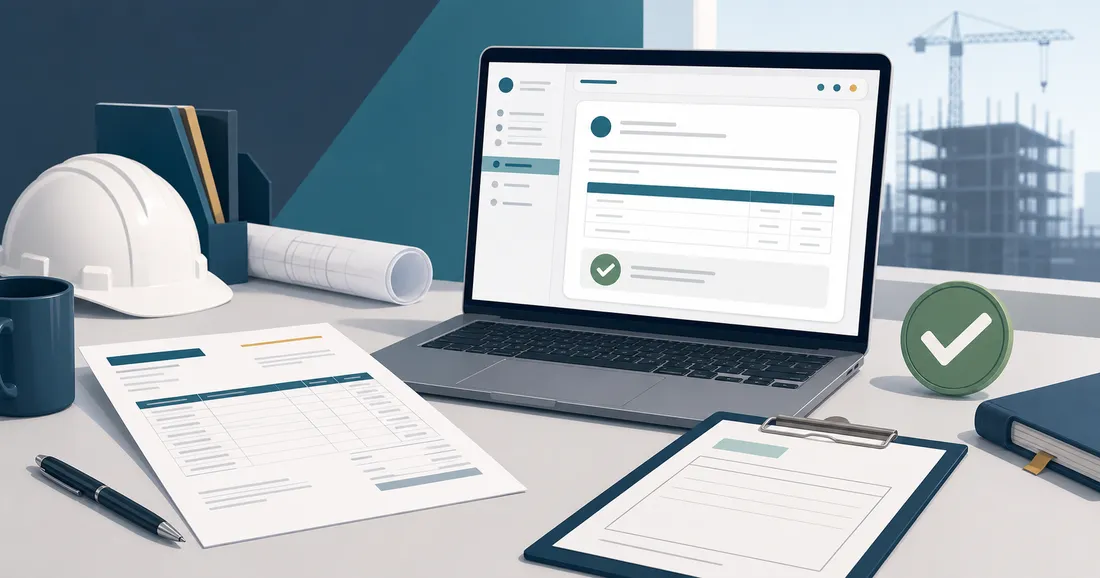
How to Build a Weekly Job Commercial Snapshot for Small Construction Firms
A weekly commercial snapshot gives you one clear view of approved spend, open purchase orders, waiting invoices and overdue approvals before the numbers drift.
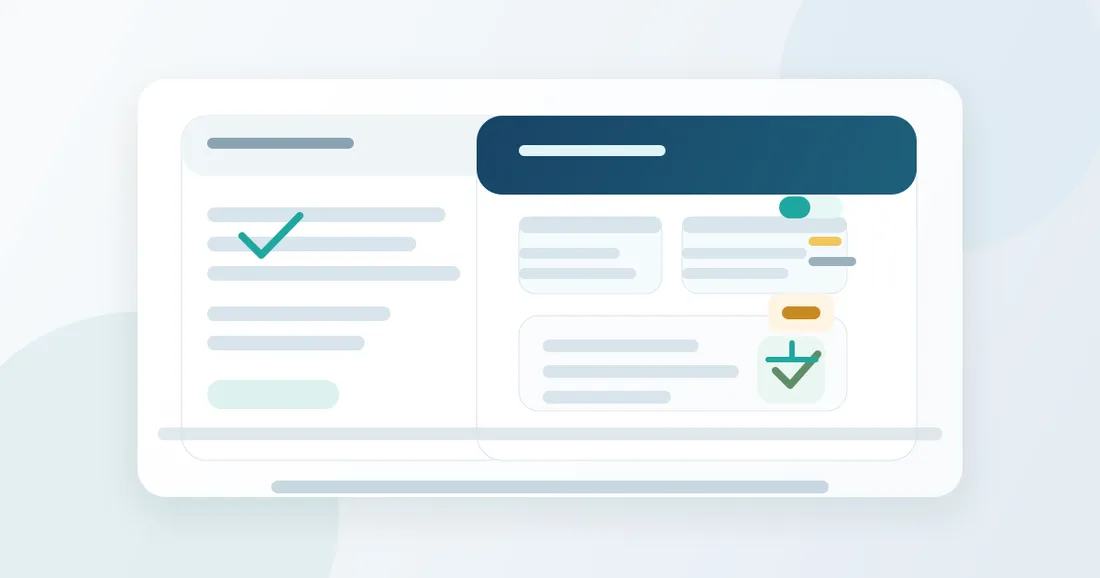
How to Build a Weekly Job Commercial Snapshot for Small Construction Firms
A weekly commercial snapshot gives you one clear view of approved spend, open purchase orders, waiting invoices and overdue approvals before the numbers drift.
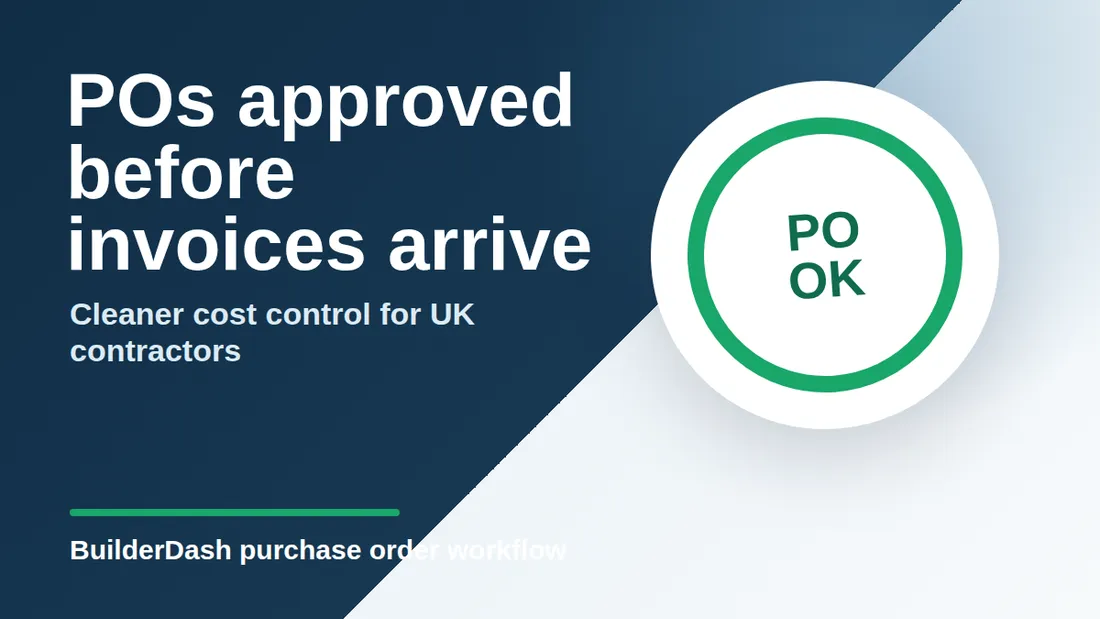
How to Build a Weekly Job Commercial Snapshot for Small Construction Firms
A weekly commercial snapshot keeps small construction firms on top of open POs, approved spend, invoices waiting, overdue approvals, and cash flow before month end turns into guesswork.
How to Check Supplier Order Confirmations Against the Original PO
A supplier confirmation should not quietly become the new commercial record. Checking it against the original PO catches scope drift, price changes, and delivery assumptions before work starts.
Why Every Subcontractor Package Needs a Clear Exclusions List
A clear exclusions list stops a package from drifting by showing exactly what the subcontractor is not pricing, providing, or returning to finish.
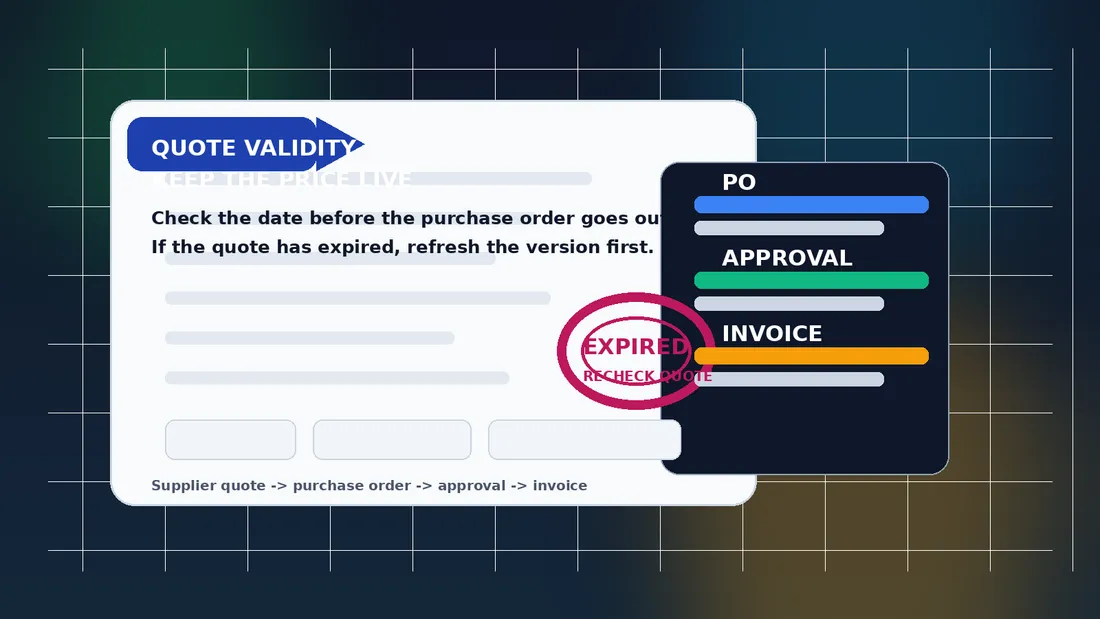
Why Quote Expiry Dates Matter Before You Raise a Purchase Order
An old quote can look harmless in an inbox and still create the wrong cost later. A simple validity check before the purchase order goes out keeps the price, scope and approval trail aligned.
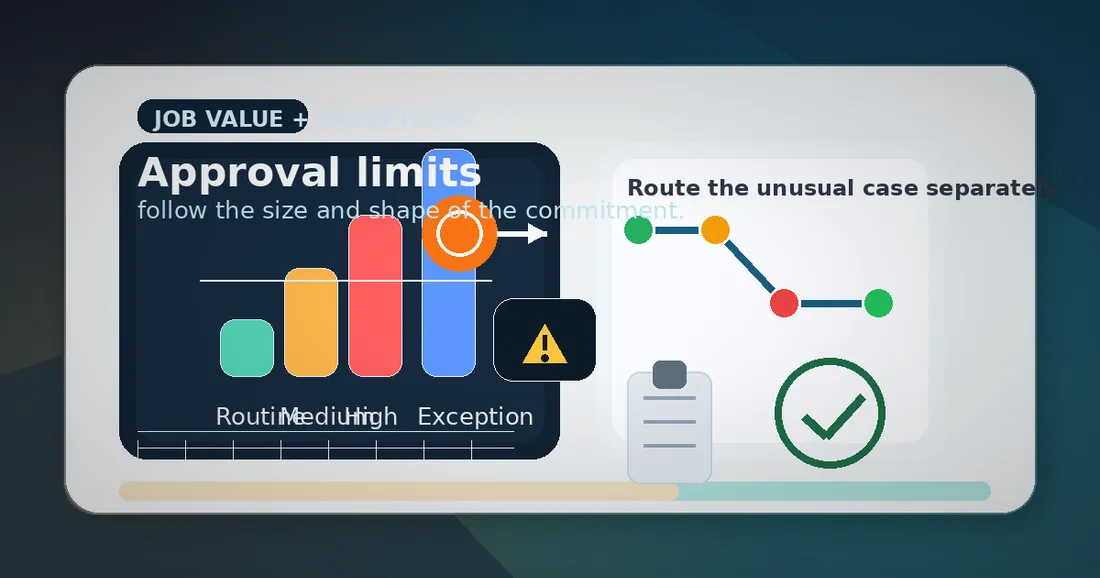
Why Approval Limits Should Follow Job Value, Not User Role
Role-based approvals sound tidy, but job value and exception routing are what keep construction spend moving without losing control of the commitment.

How to Keep Project References, Purchase Orders and Invoices Aligned
Loose project references turn simple invoices into office admin. Use one job reference from quote to payment and cut down on chasing, coding errors and rework.
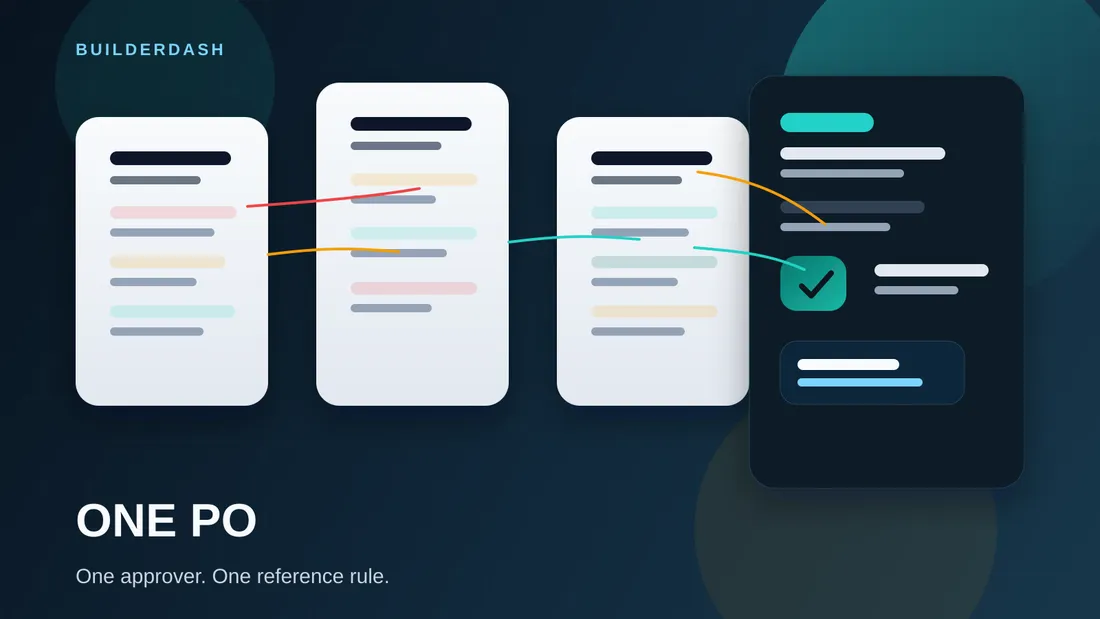
How to Stop Duplicate Purchase Orders on Live Construction Jobs
Duplicate POs usually appear when site, office, and suppliers are working from different confirmations. One live record, one approver, and one reference rule keeps the job clean.

How to Stop Duplicate Purchase Orders on Live Construction Jobs
Duplicate purchase orders usually appear when site, office, and supplier confirmations drift apart. One live record, one approver, and one reference rule keep the commitment clean.
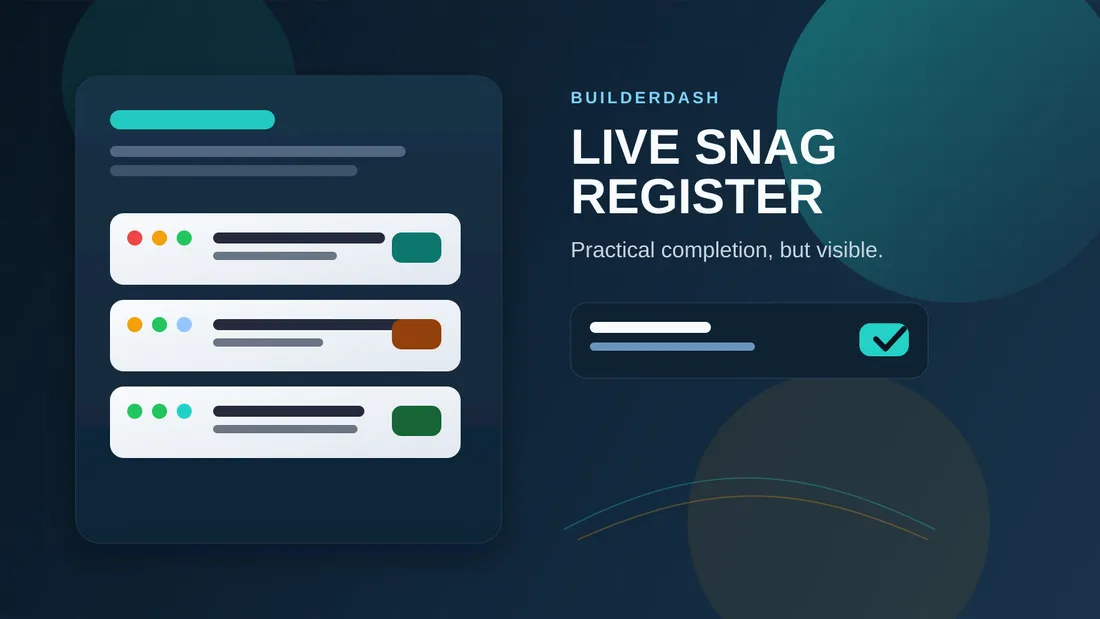
Why a Live Snagging Register Matters Before Practical Completion
Snagging falls apart when items live in photos, WhatsApp, and memory. A live register keeps each defect tied to a location, owner, target date, and sign-off.

The Construction Month-End Close Checklist for Small Contractors
A practical month-end close checklist for UK construction firms covering POs, invoices, subcontractor applications, retentions, and committed costs.
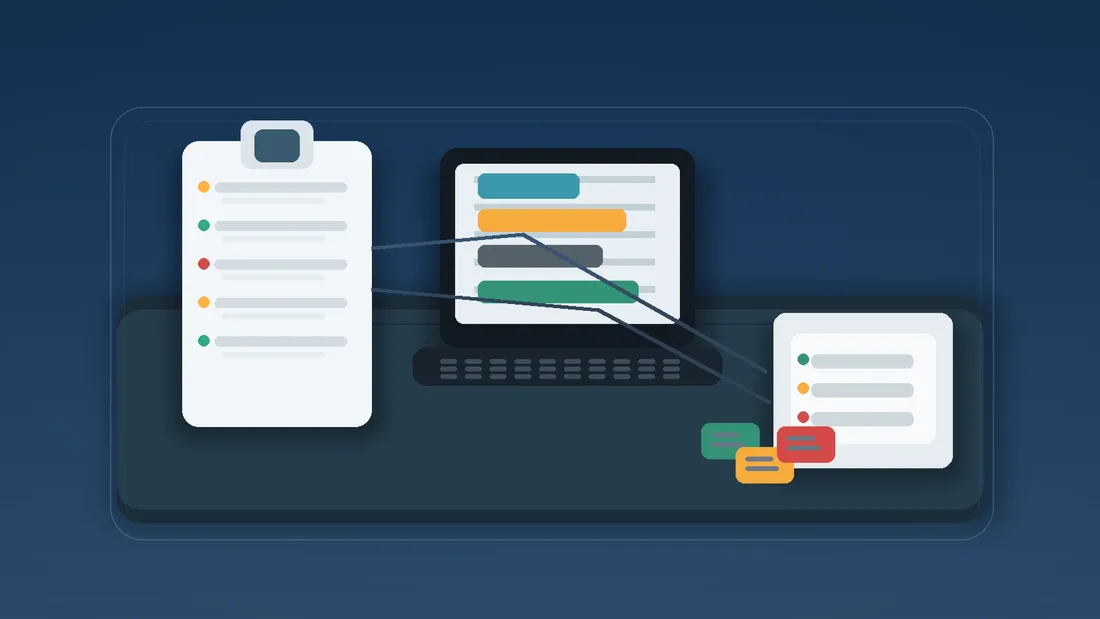
Why Construction Accounts Need a Single Exception Register
A shared inbox is not a control. A single exception register keeps missing PO numbers, wrong job references, partial claims, and disputed values visible until they are resolved.
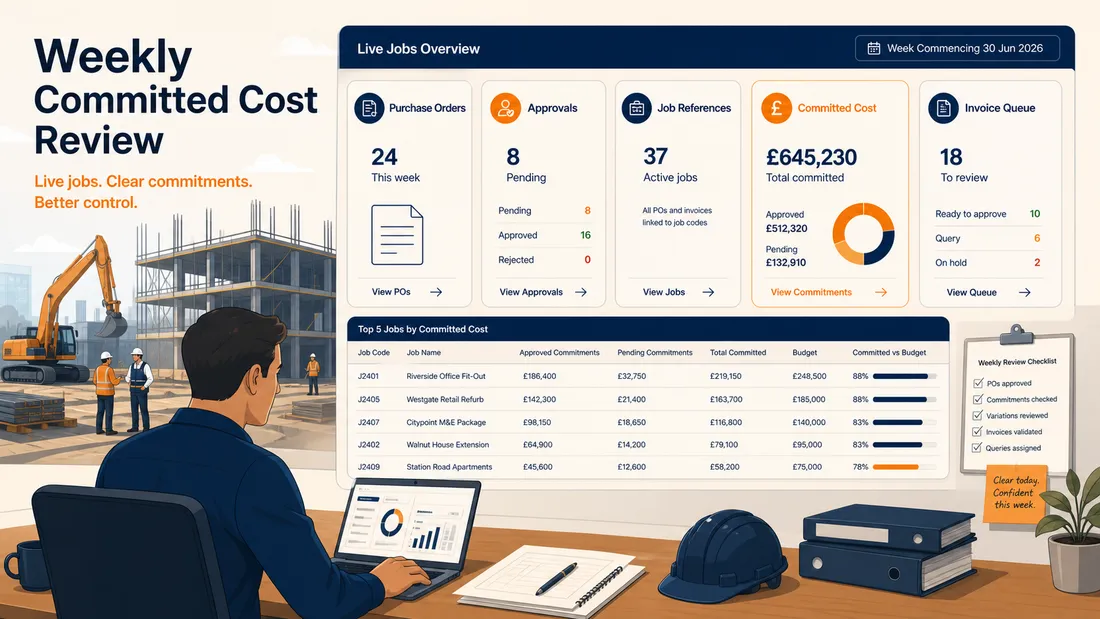
How to Run a Weekly Committed Cost Review on Live Jobs
A weekly committed cost review gives contractors a clearer view of what has been approved, what is still open, and what will hit the job next.

What Every Purchase Order Approval Should Contain Before It Becomes a Commitment
A PO should not be approved on instinct alone. The approver needs a clear scope, job reference, value, and exception trail before the order becomes a live commitment.

Why a Live Job Card Beats Email Threads on Busy Fit-Out Projects
Busy fit-out jobs do not fail because people stop communicating. They fail when the same decision is split across too many email replies and nobody can see the latest version.

What Every Construction Invoice Pack Should Contain Before Accounts Touch It
Invoice packs work best when every job sends the same evidence every time. Standardising the PO, reference, approval, and backup stops accounts from guessing and makes automation safer.
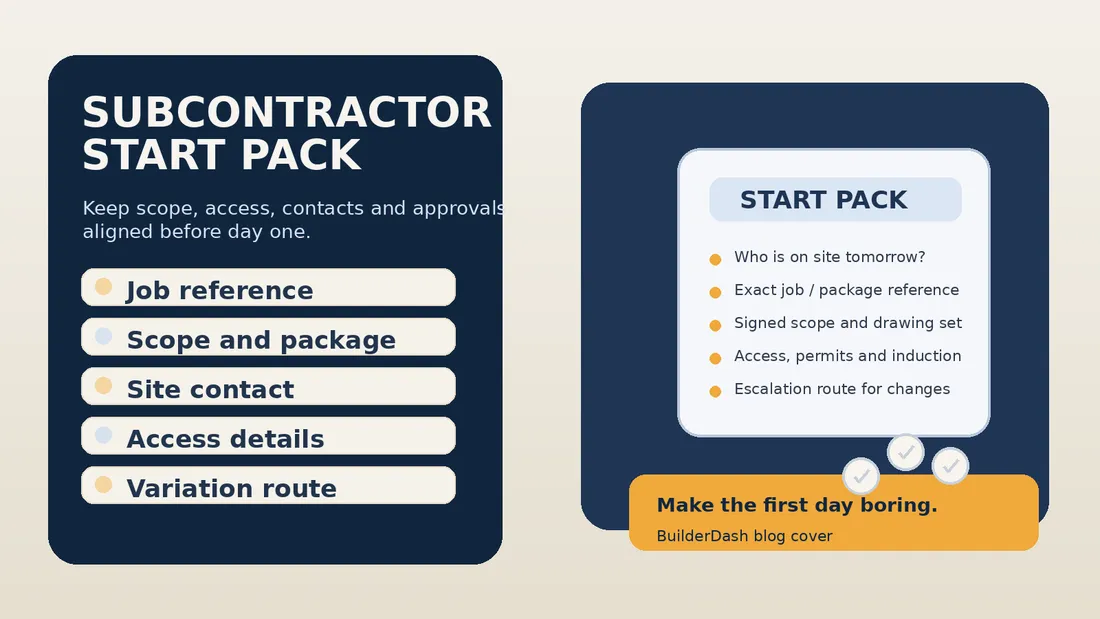
How a Subcontractor Start Pack Keeps the First Day Under Control
A clear subcontractor start pack removes the first-day scramble by aligning scope, references, access, contacts, and approval rules before work begins.

Why Plant Hire Costs Need a Live Record Before the Monthly Invoice Arrives
Plant hire bills often arrive after the job has already moved on. A simple live record for the hire start, off-hire date, site, and approval keeps the cost visible before month-end surprises.
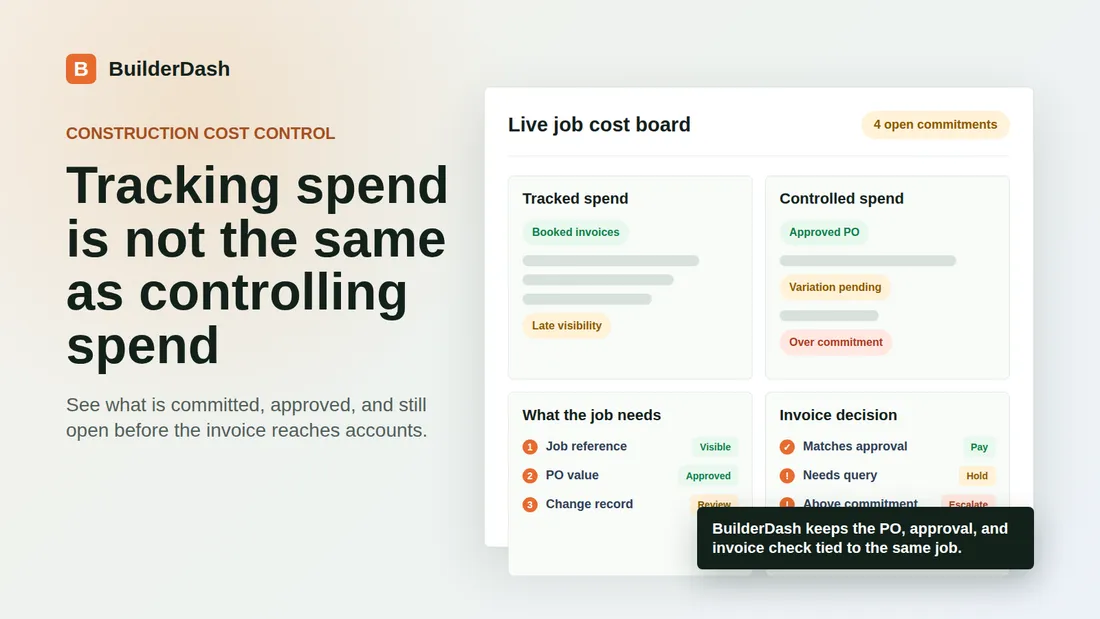
Tracking Spend Is Not the Same as Controlling Spend
A spend report can show what has already happened. Control means knowing what is committed, approved, and still open before the invoice lands.

How to Spot Partial Invoices Before They Hit Bookkeeping
Partial invoices are easy to miss because they look like normal claims at first glance. A simple check against the original commitment, delivery evidence, and approved scope keeps bookkeeping from posting the wrong number.

How to Spot Partial Invoices Before They Hit Bookkeeping
Partial invoices are easy to miss because they look like normal claims at first glance. A simple check against the original commitment, delivery evidence, and approved scope keeps bookkeeping from posting the wrong number.
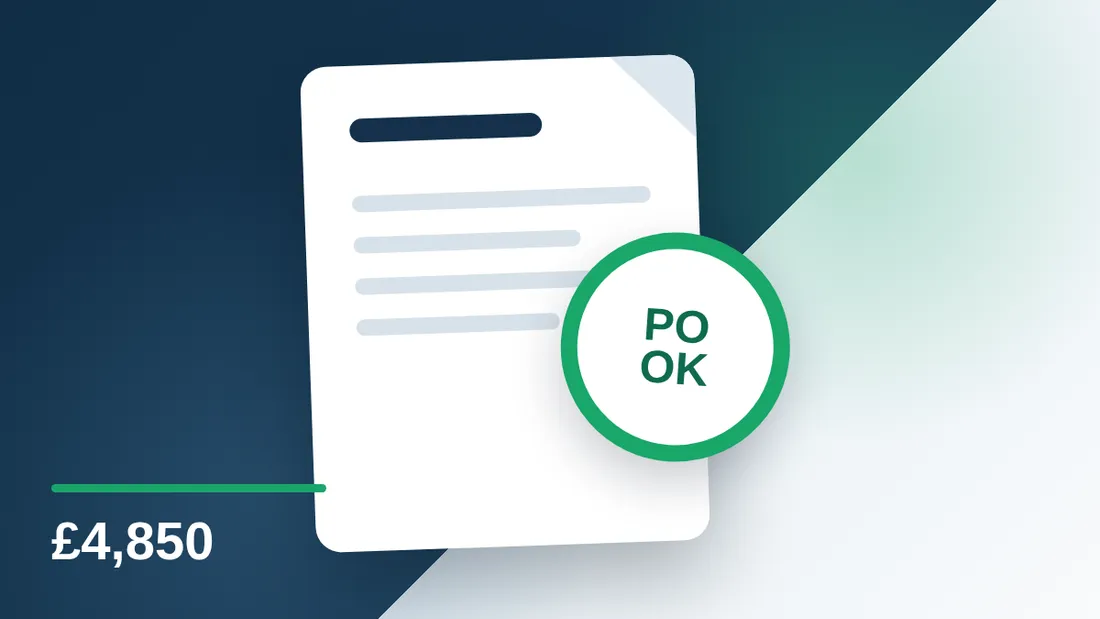
What to Do When an Approved Purchase Order Never Reaches the Supplier
An approved PO is only useful if the supplier actually receives it. Missing the send step can create delays, duplicate follow-up, and invoices that arrive before the commercial record is complete.

How to Build a Purchase Order Approval Chain That Keeps Jobs Moving During Holiday Cover
One absent approver can stall materials, labour and subcontract packages. A simple approval chain keeps decisions moving and shows who can sign what when the usual reviewer is away.

How to Build a Commercial Handover Sheet That Keeps Site and Accounts Aligned
A commercial handover sheet keeps job references, approvals, and invoice status together so site and accounts are not working from different versions of the truth.

How to Capture Site Receipts Before Small Purchases Go Missing
Small site spends still need a proper job reference. Capture receipts while they are fresh, keep them on the right job, and stop small costs drifting.

What to Do When a Purchase Order Needs Revising Mid-Job
PO revisions are normal on live jobs. The risk is not the change itself — it is losing the original value, the reason for the update, and the approval trail before accounts sees the invoice.

What to Do When a Variation Instruction Is Not Logged Properly
Variation instructions often start in WhatsApp, email, or a site conversation. A single log gives the business one trusted record before the cost reaches accounts.
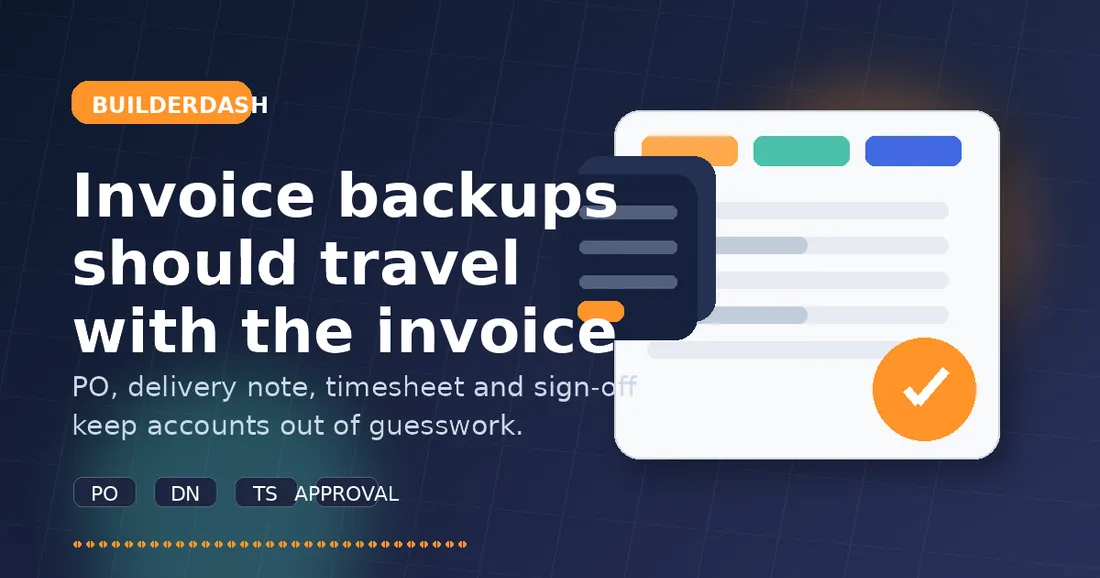
What to Do When an Invoice Arrives Without a PO Number
An invoice without a PO number is not a small admin gap. It is a sign that the cost may be hard to match, query, or post correctly unless the team follows a clear triage step.
Why Site Diaries Matter When Variations or Invoices Are Challenged
A good site diary is not admin for the sake of it. It is the record that helps a contractor prove what changed, who said what, and why a later invoice or variation should be accepted.
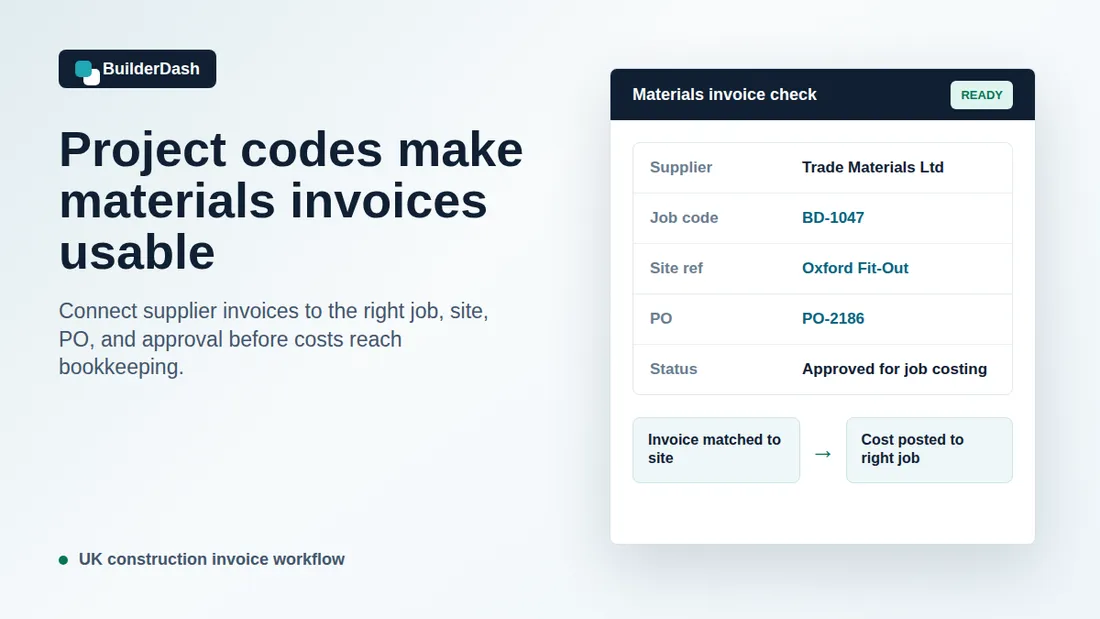
How to Use Project Codes and Site References to Keep Invoices in the Right Job
If invoices, delivery notes, and small purchases arrive with different references, job costing breaks fast. One project-code rule keeps the paperwork attached to the right job.

Why Retention Release Dates Belong in the Job Record
Retention is easy to forget once the invoice has been posted net of the deduction. A simple record for the amount, trigger, and release date keeps the money visible.
Why Consistent Project References Stop Construction Admin from Falling Apart
One job can pick up several names across site, office, and supplier paperwork. A simple reference rule keeps the right cost on the right job.

Why Consistent Project References Stop Construction Admin from Falling Apart
One job can pick up several names across site, office, and supplier paperwork. A simple reference rule keeps the right cost on the right job.

Why Consistent Project References Stop Construction Admin from Falling Apart
One job can pick up several names across site, office, and supplier paperwork. A simple reference rule keeps the right cost on the right job.

Software to Manage Purchase Orders for Construction Projects: What It Should Do After the PO Is Raised
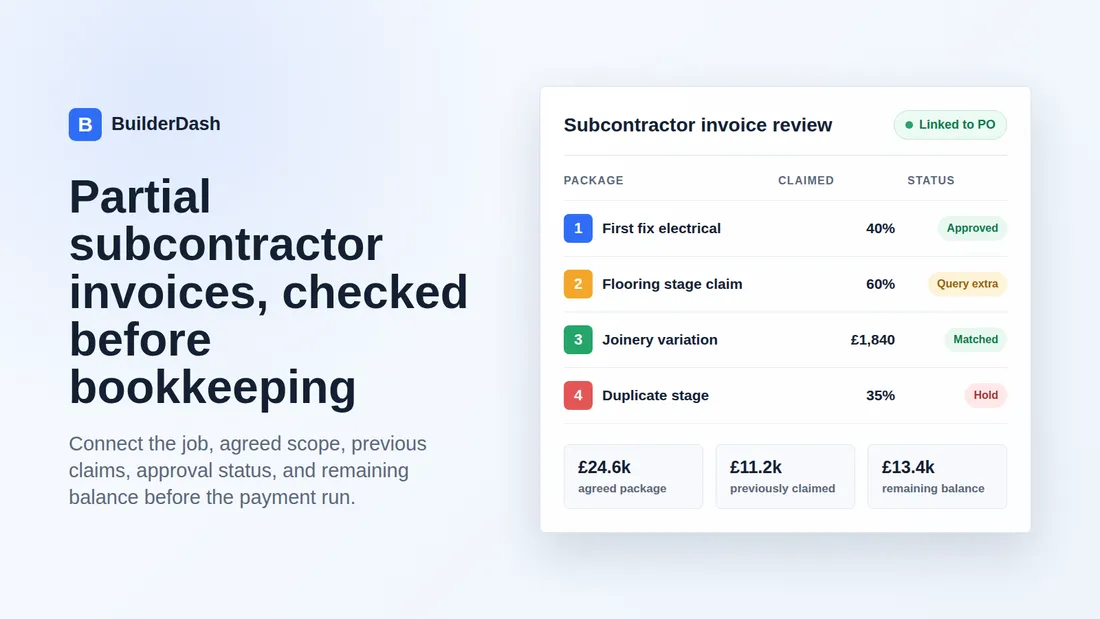
Why Subcontractor Payment Applications Need a Clear Approval Trail Before Accounts Posts Them
If a subcontractor payment application arrives without a clear approval trail, accounts ends up guessing who signed it off, what was agreed and whether any balance is disputed. Keep the decision, evidence and next action together before posting.
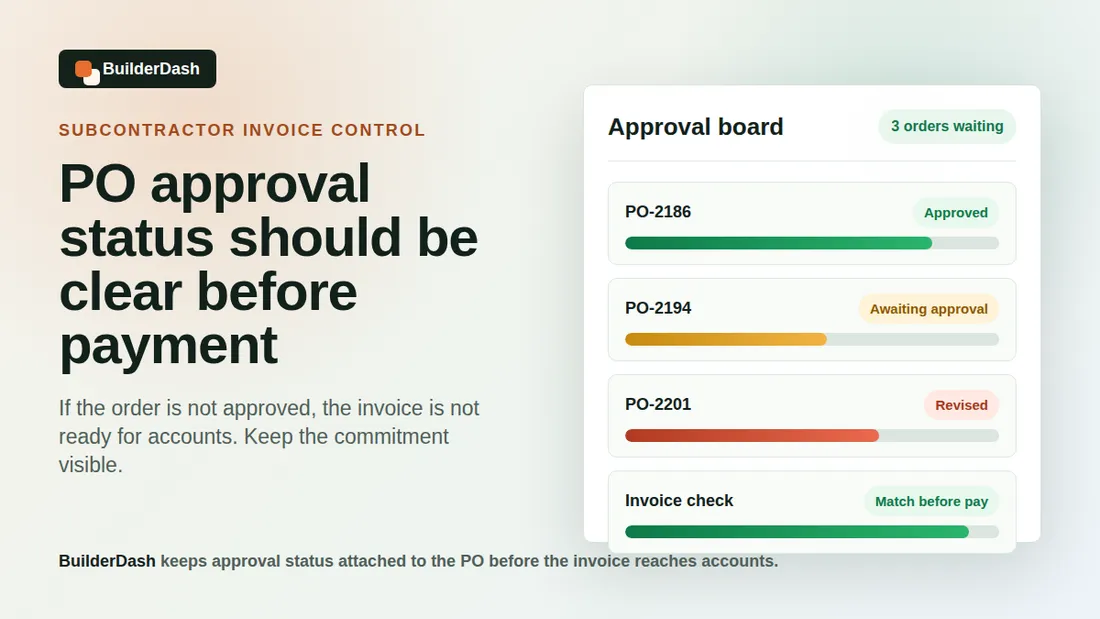
How to Reconcile Subcontractor Applications for Payment Before They Reach Accounts
A clean approval trail for subcontractor applications for payment keeps accounts moving, reduces chases, and makes job cost reviews easier.
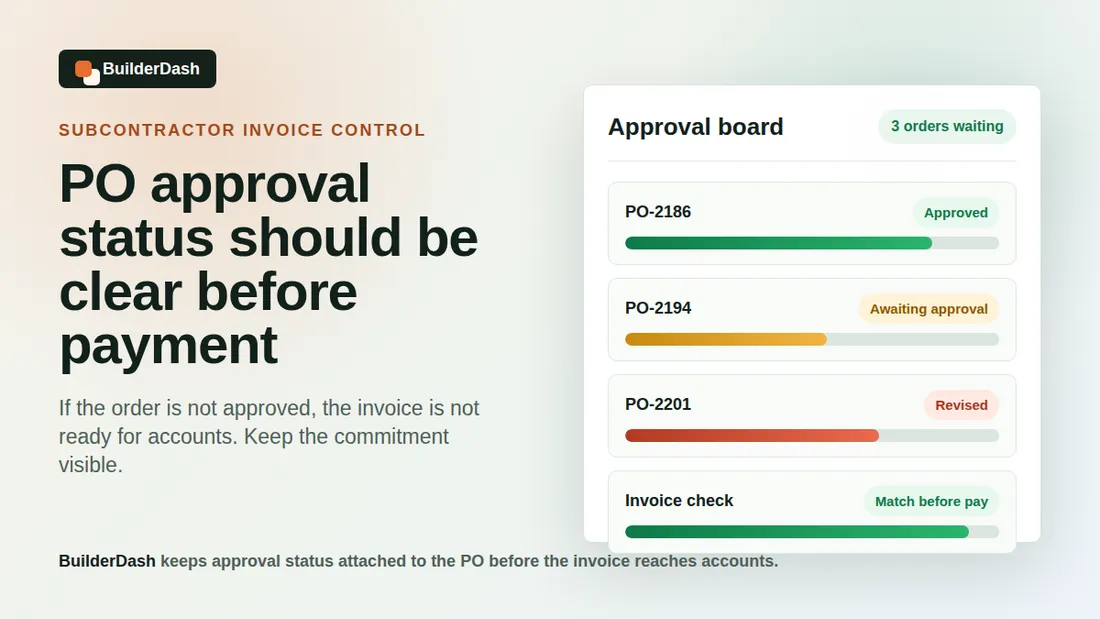
How to Build a Clean Approval Trail for Subcontractor Invoices
If site approvals live in email, WhatsApp and memory, accounts ends up chasing sign-off at the worst possible time. A clear approval trail keeps the invoice, the approver and the next action in one place.

Why Unapproved Variations Can Drain Cash Flow Before the Final Account
Unapproved variations create a quiet cash flow problem: the work gets done, the cost lands, and the money is still stuck in approval limbo. Here’s how to tighten the process.

Construction Industry Purchase Order Software: The Fields Every PO Should Capture
If a PO system only issues numbers, it is not doing enough for construction. The useful part is the data it captures and keeps visible.

Software to Manage Purchase Orders for Construction Projects: What Actually Controls Spend
The right purchase order software does more than issue numbers. It keeps approval, job reference, and invoice matching visible before spend turns into a surprise.
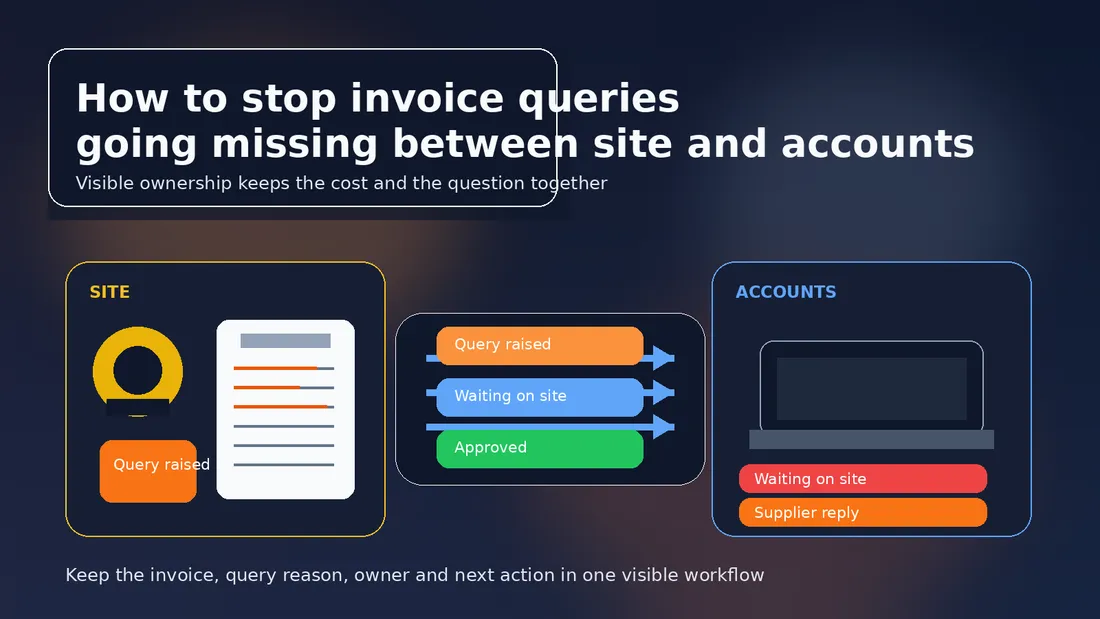
How to Stop Invoice Queries Going Missing Between Site and Accounts
When an invoice question lives only in email, WhatsApp or a memory of a phone call, it is easy for the query to vanish. This workflow shows how to keep the reason, owner and next action visible until the issue is closed.
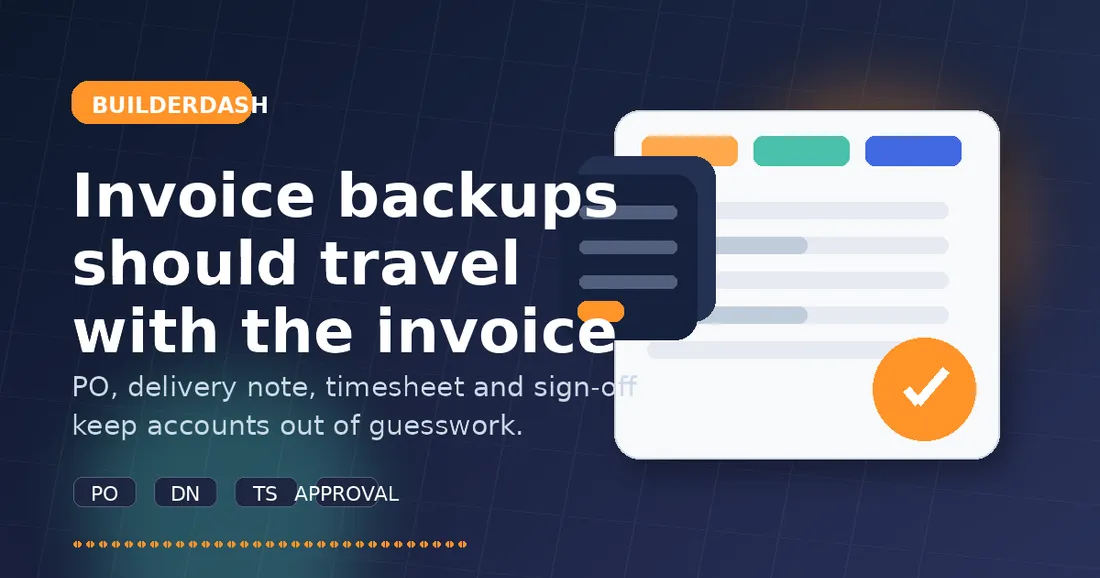
Why Construction Invoice Backups Should Travel With the Invoice
An invoice on its own is not enough evidence. If the PO, delivery note, timesheet or sign-off is missing, accounts is left to guess whether the cost is ready to post.

BuilderDash and solidtakeoff.com Integration Is Coming Soon
Takeoff software is only useful if the quantities it produces make it into the next step without retyping. BuilderDash and solidtakeoff.com are working towards a cleaner hand-off between estimating and job control.
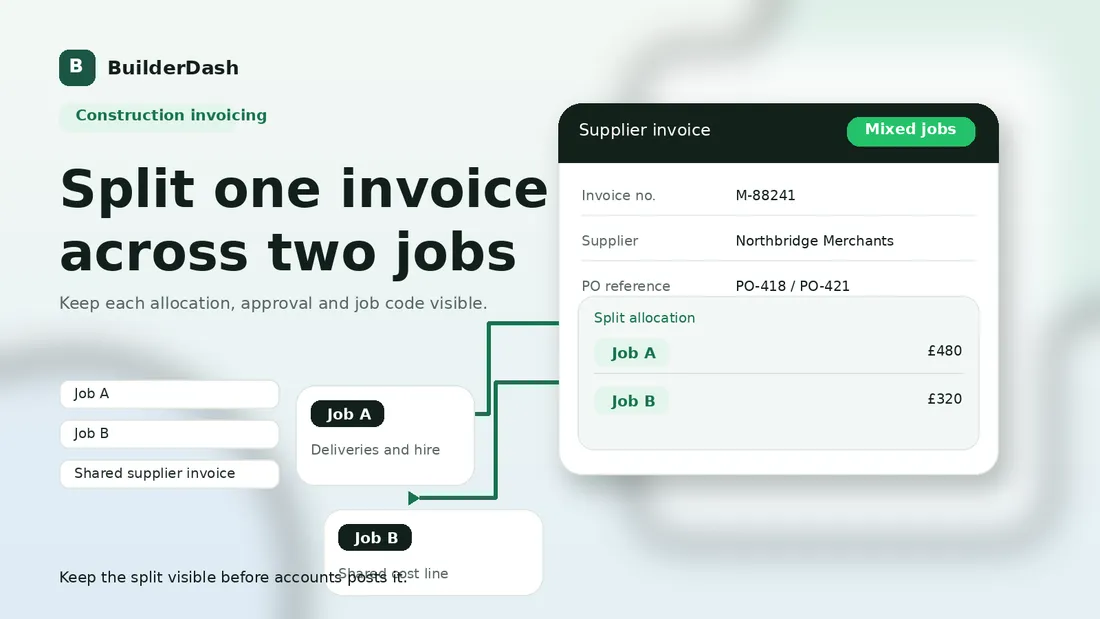
How to Split a Supplier Invoice Across Multiple Jobs Without Losing Job Costing
One supplier invoice can belong to more than one job. The fix is a clear split allocation, not a guess in accounts after the cost has already landed.

Why Labour-Only Invoices Should Not Reach Accounts Without a Timesheet
Labour-only invoices are only easy to approve when the timesheet, site reference, and sign-off are already attached. Without that evidence, accounts is left to guess.
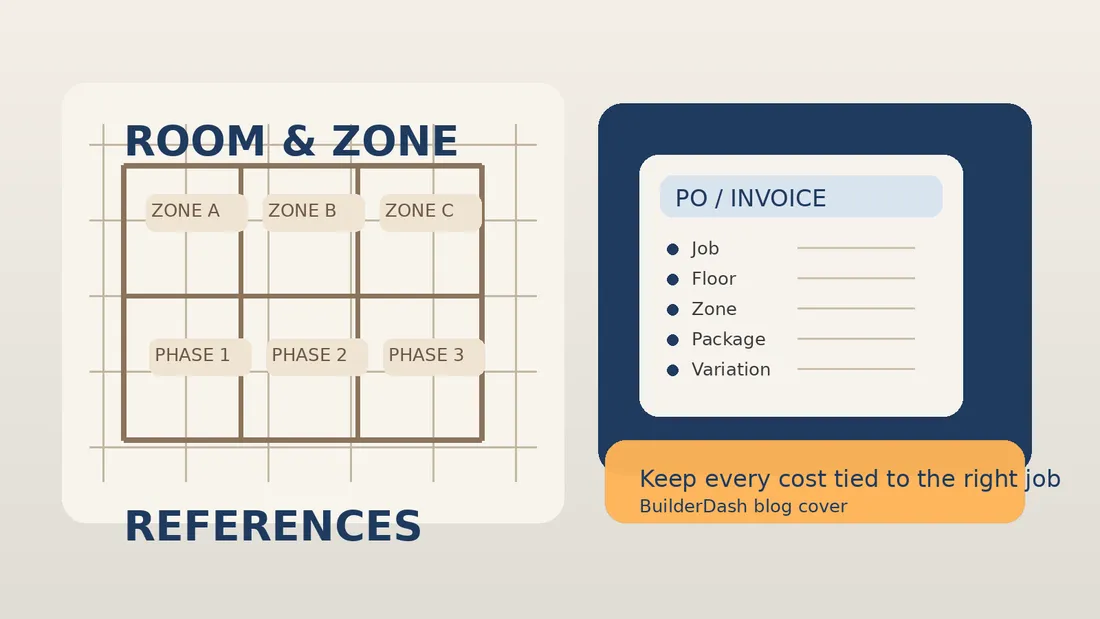
Why Fit-Out Jobs Need Room and Zone References on Every PO
On fit-out jobs, a generic site name is not enough. Room and zone references make it easier to match POs, variations, and invoices to the right part of the job.

How to Use Project Codes and Site References to Keep Invoices in the Right Job
If invoices, delivery notes, and small purchases arrive with different references, job costing breaks fast. One project-code rule keeps the paperwork attached to the right job.

How to Track Retentions Without Losing the Release Date
Retention is easy to miss when the deduction sits inside a normal invoice total. Contractors need a simple way to record the retention amount, the release trigger, and the date it should be chased.
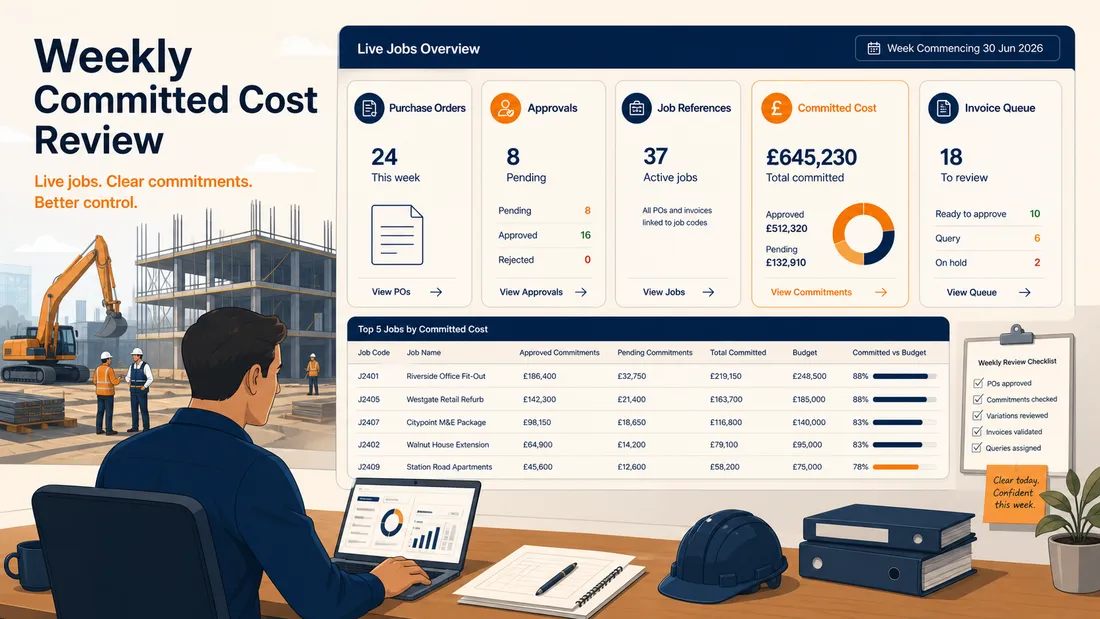
How to Run a Weekly Committed Cost Review on Live Jobs
A weekly committed cost review gives contractors a clearer view of what has been approved, what is still open, and what will hit the job next.
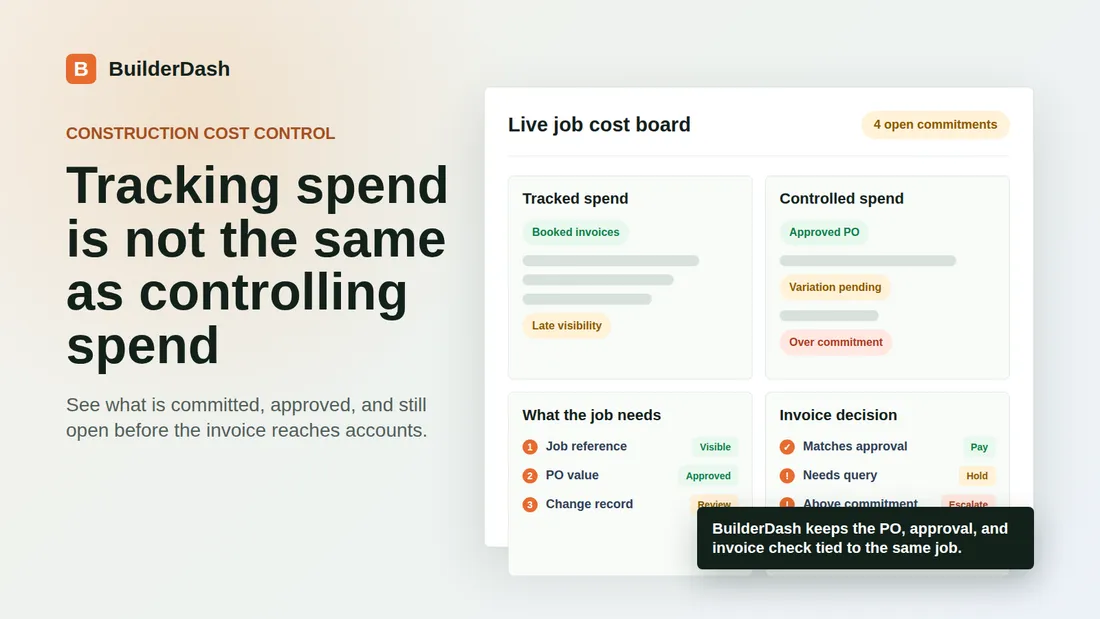
Tracking Spend Is Not the Same as Controlling Spend
A spend report can show what has already happened. Control means knowing what is committed, approved, and still open before the invoice lands.
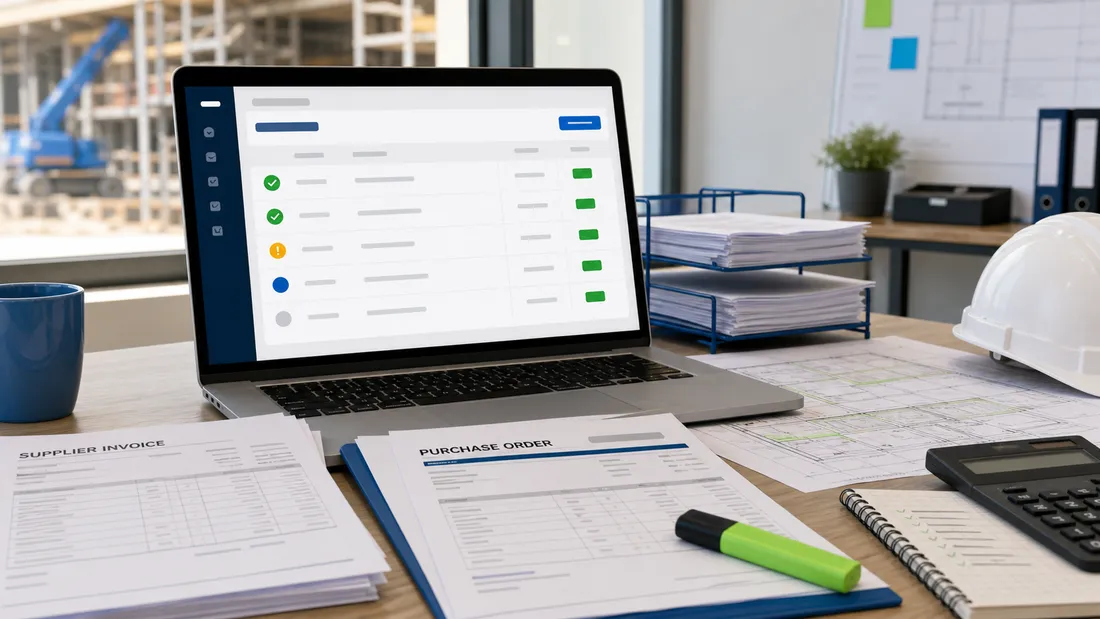
What to Check Before a Construction Payment Run
A payment run should not be a race to clear the accounts inbox. This checklist helps UK contractors decide which supplier and subcontractor invoices are ready to pay, which need a query, and which need better approval evidence first.

How to Reconcile Supplier Statements Before Month End
Supplier statements are useful only when they are checked against the work, orders, invoices, and queries behind them. Here is a practical month-end workflow for construction teams.

What a Clean Subcontractor Invoice Workflow Looks Like
A subcontractor invoice should be easy to trace, easy to match, and easy to query. The workflow matters more than the invoice file itself.
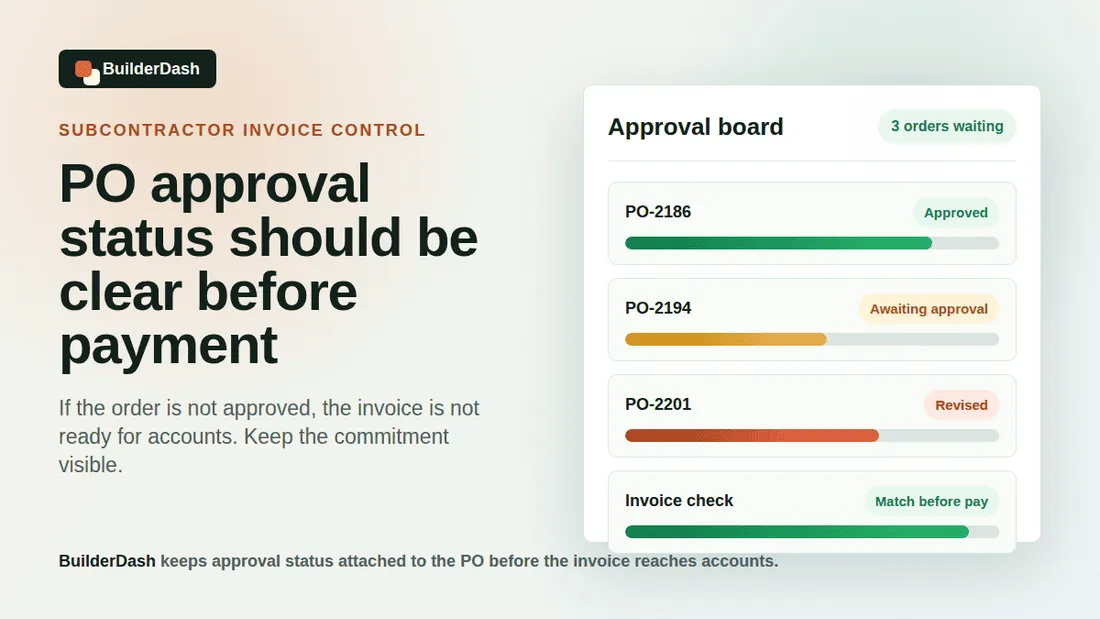
Why PO Approval Status Should Be Checked Before a Subcontractor Invoice Is Paid
An invoice may be accurate and still not be payable. Construction teams need a simple rule for checking PO approval status before costs reach accounts.
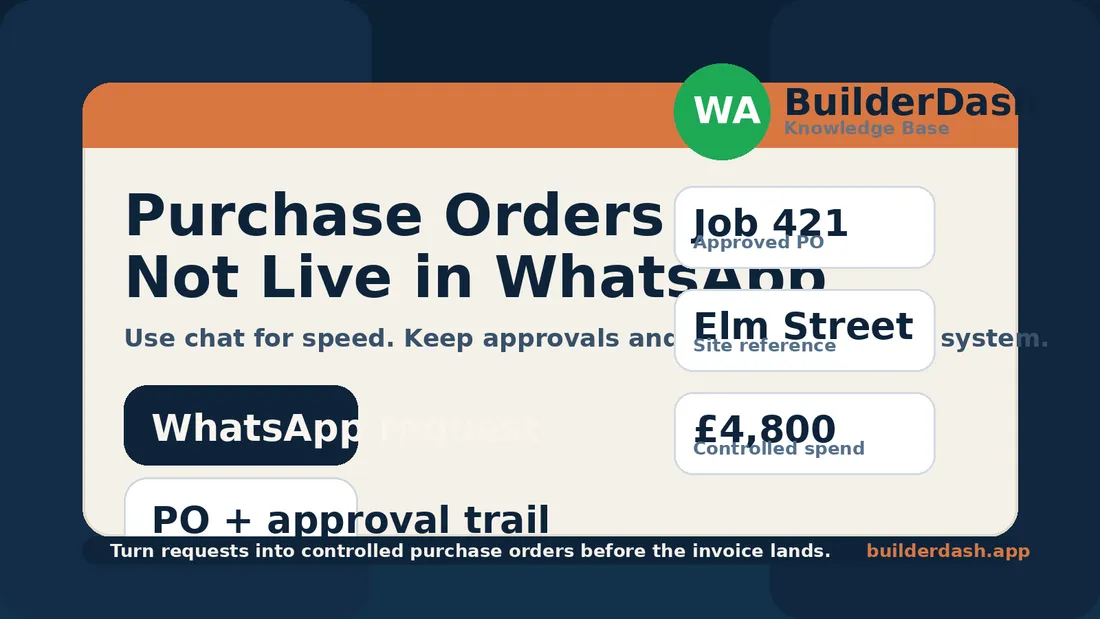
How to Stop Purchase Orders Getting Lost in WhatsApp
WhatsApp is quick for site communication, but it is a poor place to store commercial approvals. Contractors need a simple rule for turning chat requests into proper purchase orders before spend starts drifting.

Why Delivery Notes Matter Before Materials Invoices Are Approved
A materials invoice should not be approved simply because it names the right site. Matching the purchase order, delivery evidence and invoice helps contractors catch missing, damaged or incorrectly charged goods before payment.

How to Handle Disputed Supplier Invoices Without Losing Cost Control
A queried invoice should not disappear into an email chain or remain fully approved while the site team investigates it. This practical workflow shows how construction businesses can record the issue, protect job costs and reach a clear payment decision.

Making Tax Digital for Sole Trader Builders: Who Is Affected and When?
Making Tax Digital for Income Tax now applies to some sole trader builders, with lower income thresholds following in 2027 and 2028. This practical guide explains who is affected, what qualifying income means, and how to keep job records ready for quarterly reporting.
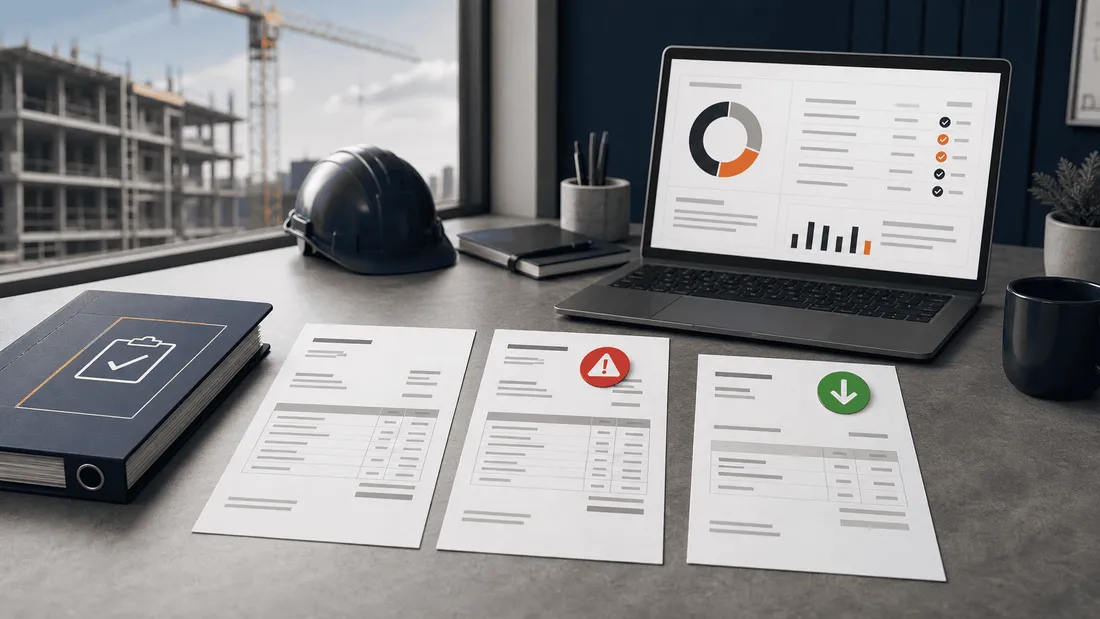
How to Prevent Duplicate Supplier Invoices in Construction
Duplicate invoices can enter a construction business through several routes and still look legitimate. Here is a practical checking workflow for catching repeats, applying credit notes correctly, and keeping job costs accurate before the payment run.

How to Control Purchase Order Overspend and Variations in Construction
A purchase order only controls spend if changes are recorded before the invoice arrives. Here is a practical workflow for handling overspend, revised orders, and construction variations without losing sight of the committed job cost.
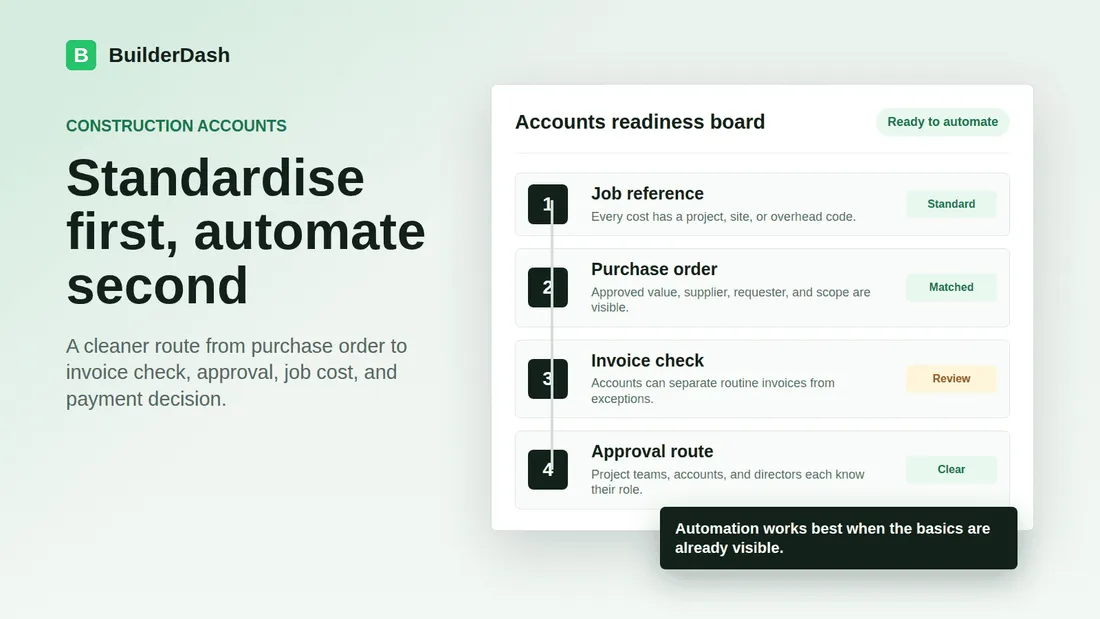
What Construction Businesses Should Standardise Before Automating Accounts
Accounts automation works best when the basic construction controls are already clear. Before pushing more invoices through software, contractors should standardise purchase orders, job references, approval rules, and exception handling.
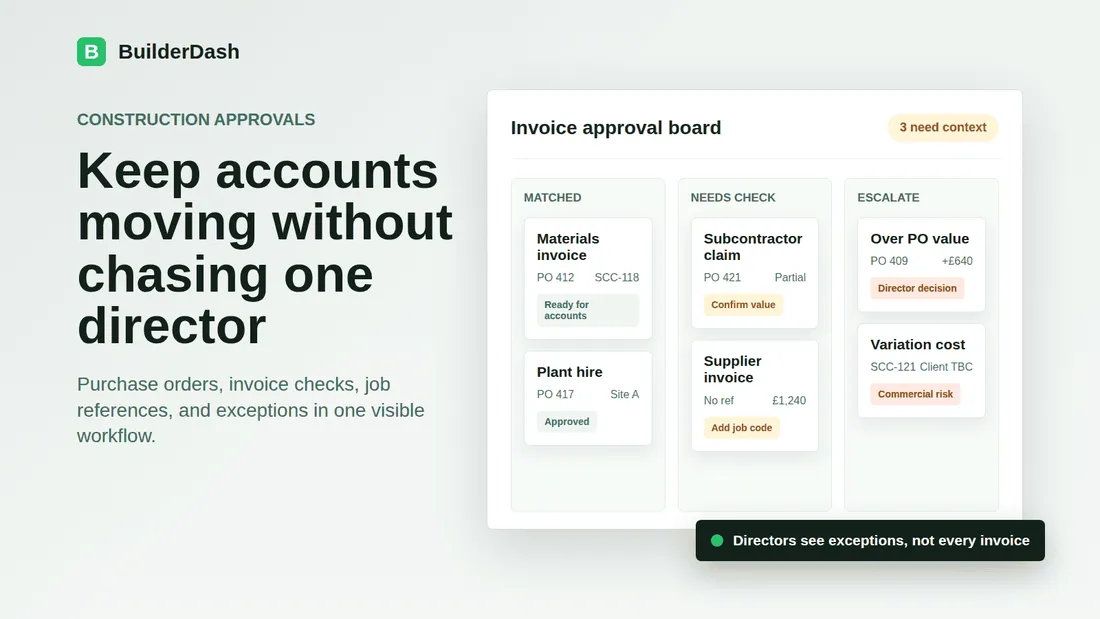
Why Directors Should Not Be the Accounts Approval Bottleneck
When every supplier invoice, subcontractor claim, and purchase order query waits for a director, accounts slows down and job costing becomes less useful. A cleaner approval workflow keeps control visible without turning one person into the bottleneck.
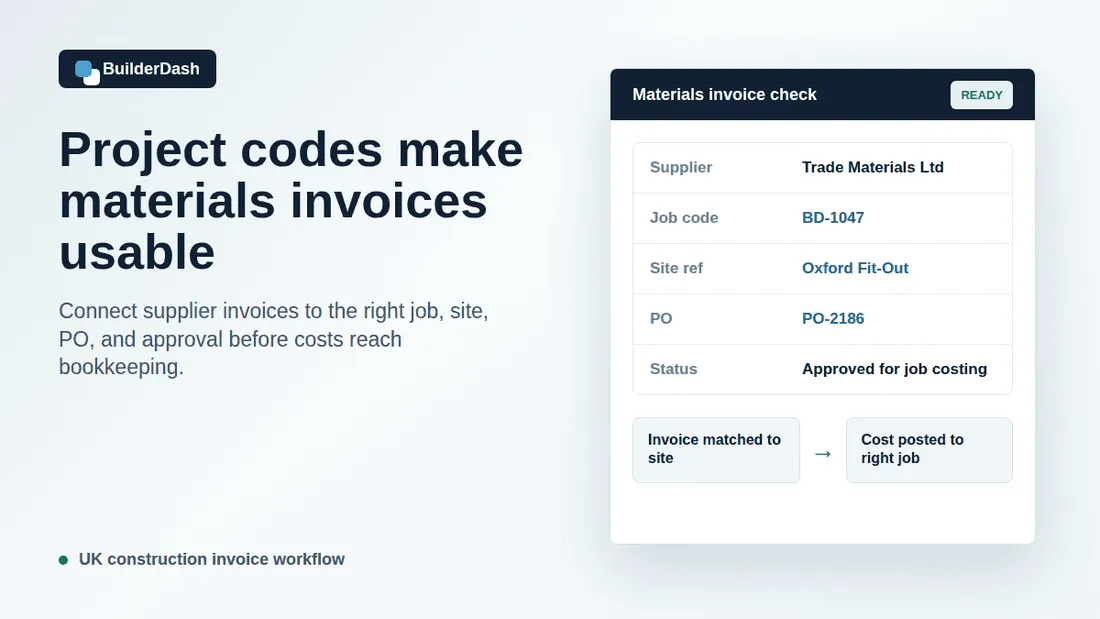
Why Project Codes and Site References Matter on Materials Invoices
Materials invoices become harder to control when the job, site, PO, and delivery context are missing. Clear project codes and site references help accounts and project teams agree what the cost belongs to before it reaches bookkeeping.
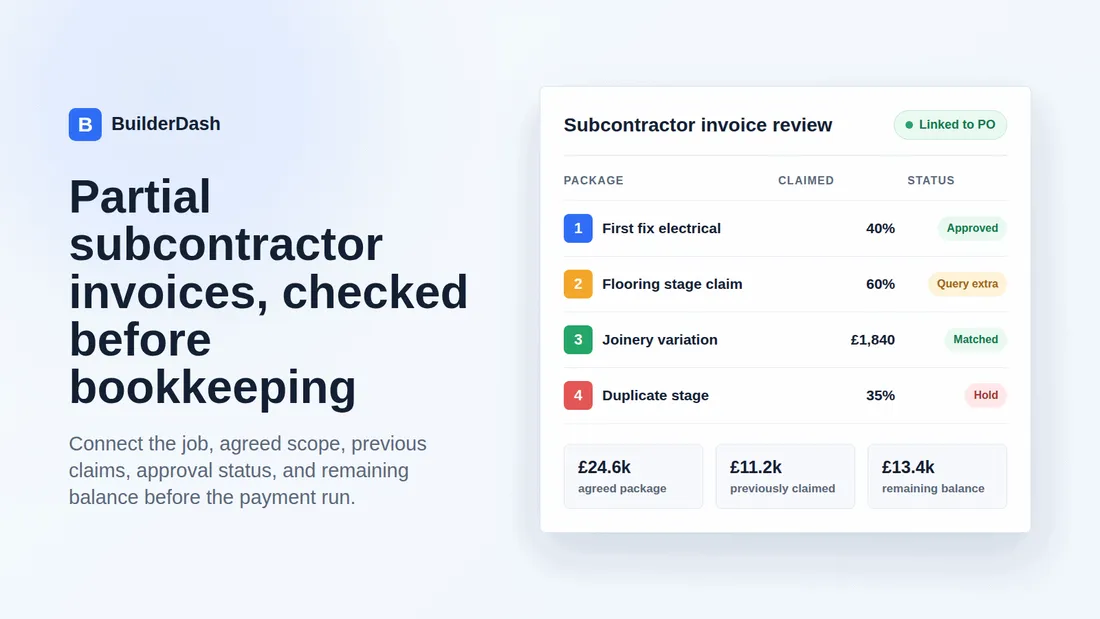
How to Spot Partial Subcontractor Invoices Before They Hit Bookkeeping
Partial subcontractor invoices are not a problem by themselves. The problem is when nobody can see what has already been claimed, approved, queried, or held back.
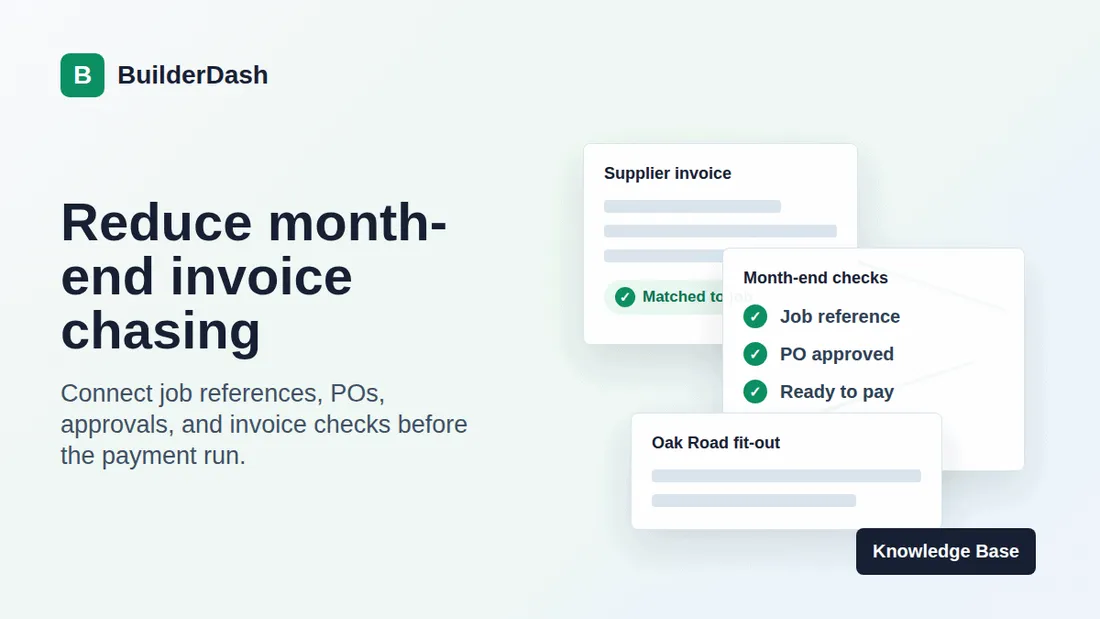
How to Reduce End-of-Month Invoice Chasing in Construction
Month-end invoice chasing is usually a sign that job references, approvals, purchase orders, and invoice checks are not joined up early enough.
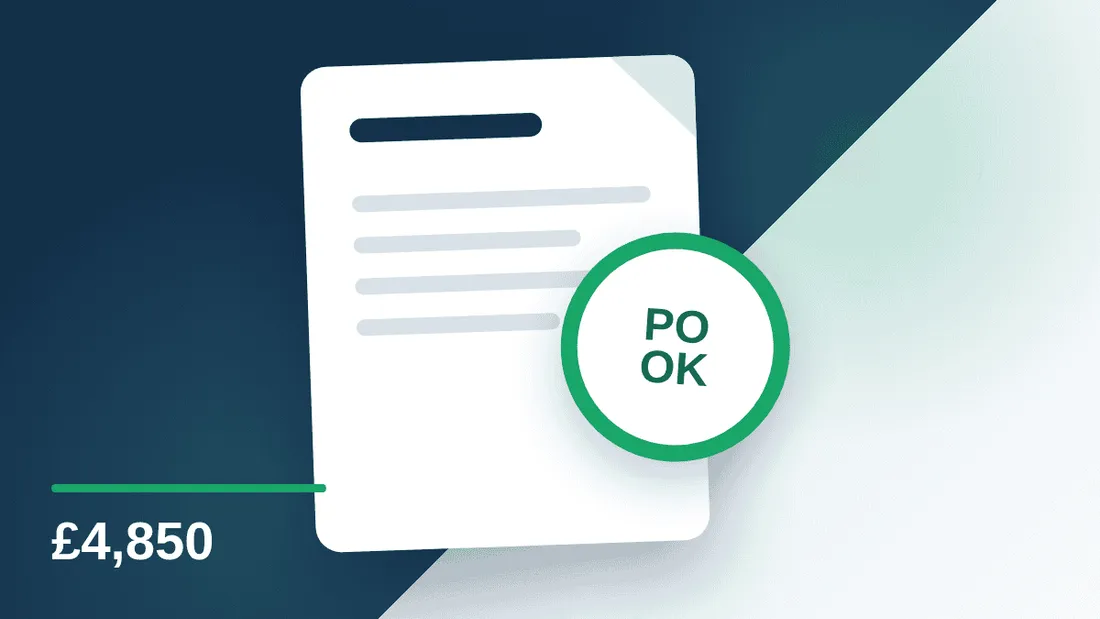
Construction Purchase Order Software: How Small Contractors Control Spend Before Invoices Arrive
For small UK contractors, purchase orders are not just paperwork. They are the point where spend control starts, before supplier and subcontractor invoices reach accounts.
Reading is good. Running the job properly is better.
Put it into practice with BuilderDash - one system for every enquiry, job, quote and invoice.